

-
Products
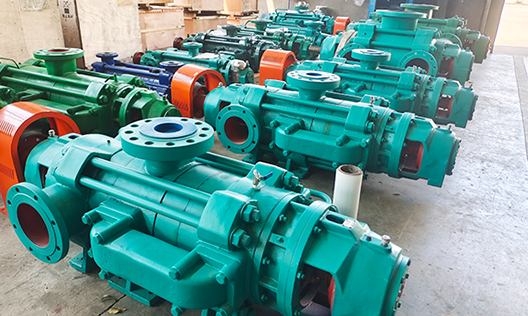
Puede fabricar 26 series de productos, incluyendo bombas de circulación para grandes centrales eléctricas, bombas de condensación para grandes centrales eléctricas, bombas petroquímicas, bombas multietapa, bombas de aguas residuales y lodo, bombas multietapa autoequilibradas, bombas de doble succión y única etapa tipo split, y bombas centrífugas de succión simple y única etapa.
-
Cases
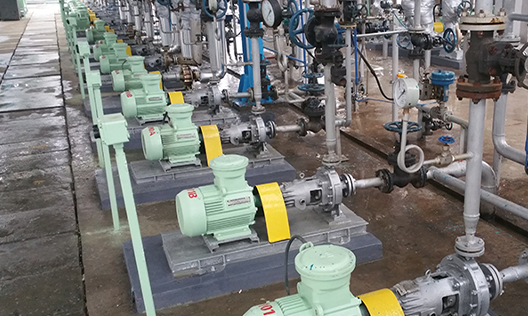
La elección de más de cientos de miles de clientes, cubriendo industrias como minería de carbón, metalurgia, química, energía, recursos hídricos, alimentos, municipalidades y protección ambiental, y exportando a Asia Sudeste, África, América y otros lugares.
-
Service
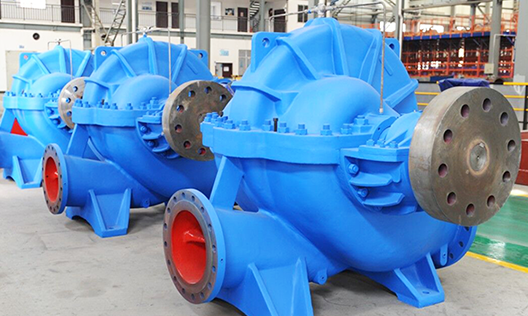
La empresa fue la primera en la industria en obtener las certificaciones internacionales del sistema de calidad ISO 9001:2008, del sistema de gestión ambiental ISO 14001 y del sistema de gestión de seguridad y salud ocupacional GB/T 28001, además de la certificación API 610 de la Asociación Estadounidense del Petróleo.
-
About us
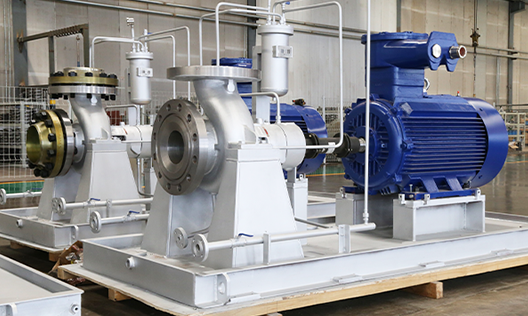
La empresa, fundada en 1989, es una empresa nacional de alta tecnología integral que integra diseño, investigación y desarrollo, fabricación y servicios; actualmente es una empresa clave en la industria china de bombas centrífugas y una de las grandes fábricas especializadas.
-

Blogs
Con productos innovadores, calidad excepcional y servicios integrales, buscamos la verdad y la pragmática, avanzamos con iniciativa, y nos esforzamos por lograr el objetivo de ser "la marca líder en el campo de aplicación de bombas centrífugas en el país"! Raigada en Hunan, orientada a todo el país y hacia el mundo!
Causes of Misalignment (Excessive Deviation in Coaxiality) of Couplings in Horizontal Multistage Pumps and On-site Remedial Measures
Publication Date:
2026-03-04
Author:
Source:


During the long-term operation of horizontal multistage pumps, improper coupling alignment and excessive coaxial deviation can lead to excessive vibration, bearing overheating, seal leakage, and damage to the coupling rubber blocks. / High-frequency triggers of abnormal tooth surface wear directly affect the safe and stable operation of pump units. Such issues are not caused by a single stage alone but permeate the entire lifecycle—from manufacturing and installation to operating conditions and maintenance. In this article, multi-stage pump manufacturers... Changsha Zhonglian Pump Industry Drawing on their hands-on experience in on-site installation and maintenance, the technical experts will share the causes of misalignment (excessive deviation in coaxiality) in horizontal multistage pump couplings, as well as practical on-site troubleshooting methods. They’ll also dissect the root causes and provide actionable preventive and corrective measures for users’ reference.

1. Excessive misalignment of the coupling’s coaxiality 5 Realistic-like triggers
1. Insufficient manufacturing and assembly accuracy
Whether it’s an elastic coupling, a gear coupling, or a diaphragm coupling, if the manufacturing process at the factory results in end-face runout, excessive tolerances in the inner bore, asymmetric keyways, or inherent machining deviations in the shaft dimensions and concentricity of the pump shaft and motor shaft—and on top of that, if the flatness of the common base shared by the pump and motor fails to meet the required standards—these factors can all lay the groundwork for alignment deviations right from the start.
2. The on-site installation and alignment procedure is not standardized.
The installation phase is the stage most prone to deviations: an uneven foundation, uneven tightening of anchor bolts, reliance solely on visual inspection rather than dial indicators during alignment, and arbitrary adjustments to the relative positions of the pump and motor can all directly result in excessive radial and end-face misalignment of the coupling. Furthermore, some installers lack experience in aligning multistage pumps and fail to leave adequate thermal expansion allowances as specified in the standards, which can lead to satisfactory cold-state alignment but subsequent shaft misalignment once the equipment is running.
3. External forces under operating conditions and environmental deformation interference
After the equipment is put into operation, additional stresses caused by thermal expansion and contraction of the pipelines, as well as forced alignment of the inlet and outlet pipelines, can forcibly displace the pump body. Uneven settlement of the foundation, loosening of the base, and even minute deformations of the pump body and base under high-temperature operating conditions will gradually disrupt the original alignment, causing misalignment in the coupling.
4. Long-term operation leads to component wear and loosening.
Excessive wear and increased clearance in pump bearings and motor bearings can cause radial vibration in the shaft system. Over a long period, vibration can loosen anchor bolts and base connectors, leading to displacement of the pump body or motor. Additionally, wear and aging of the coupling’s elastomeric elements and cushioning components, resulting in loss of their compensating ability, can exacerbate misalignment, manifesting as increasingly severe coupling eccentricity.
5. Lack of routine inspections and maintenance
During equipment operation, the coaxiality is not regularly re-measured, and the condition of anchor bolts and bases is not checked. As a result, wear and loosening issues are not addressed in a timely manner. Wear-prone components such as bearings and couplings continue to be used beyond their service life, and minor deviations gradually escalate into severe misalignment. Over time, this can lead to serious equipment failures.
II. Prevention and On-site Correction Measures for Misalignment of Couplings
1. Control manufacturing and matching accuracy at the source.
Select qualified couplings and matching components, and verify the machining accuracy and tolerances. After the pump and motor are delivered, inspect the shaft end and base surface flatness to reduce the risk of inherent deviations at the hardware level.
2. Ensure proper installation alignment and strictly control installation quality.
Professional personnel use dial indicators to perform precise alignment, strictly controlling radial and end-face deviations within the specified tolerances. A thermal expansion allowance is reserved to prevent forced installation of pipelines and avoid external forces that could misalign the pump casing.
3. Eliminate external forces under operating conditions and stabilize the equipment foundation.
Optimize the pipeline layout and install expansion joints to offset thermal stresses. Regularly inspect the foundation and substructure; promptly reinforce any areas found to be settling or loosening, ensuring the stability of the pump unit installation environment.
4. Strengthen regular maintenance and promptly replace wear-and-tear parts.
Establish a periodic inspection system to regularly re-measure the coaxiality of couplings, check the condition of bearings, and verify the tightness of fasteners. Bearings and elastic elements of couplings that have exceeded the wear limits should be replaced promptly to prevent minor issues from escalating.
5. On-site rapid calibration and component replacement
Pump units with misaligned centers have been identified. After shutdown, re-align and adjust them using a dial indicator. If misalignment cannot be corrected due to coupling deformation or shaft end wear, directly replace the coupling with a qualified one; if necessary, perform repair work on the shaft system.
Misalignment of the coupling in horizontal multistage pumps is the result of a combination of factors, including manufacturing accuracy, installation procedures, operating conditions, operational wear, and maintenance practices. As long as we control accuracy from the source, adhere strictly to installation standards, maintain stable operating conditions, and carry out regular maintenance and upkeep, we can effectively prevent excessive misalignment, reduce pump unit failures, and extend the service life of the equipment.
Previous:
Recommended Information


Related Products
Perhaps you also want to know?
Zoomlian Pump Industry
Address:No. 210, Environmental Protection Middle Road, Yuhua Economic Development Zone, Changsha City, Hunan Province China
All rights reserved © Changsha Zoomlian Pump Co., Ltd.
This website supports IPv4 IPv6 bidirectional access
Website construction:Zhongqi Power Changsha