

-
Products
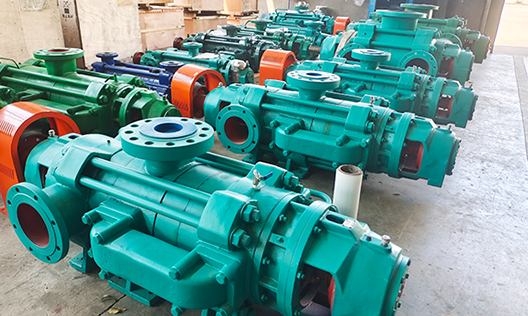
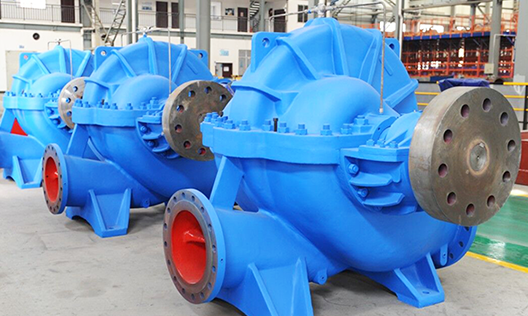
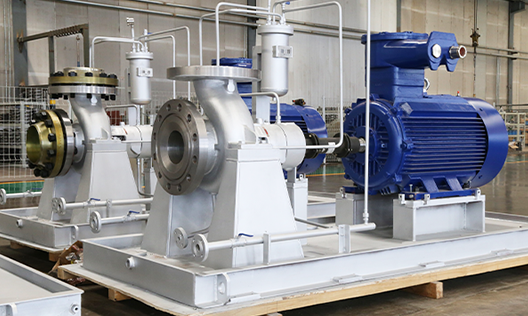
Puede fabricar 26 series de productos, incluyendo bombas de circulación para grandes centrales eléctricas, bombas de condensación para grandes centrales eléctricas, bombas petroquímicas, bombas multietapa, bombas de aguas residuales y lodo, bombas multietapa autoequilibradas, bombas de doble succión y única etapa tipo split, y bombas centrífugas de succión simple y única etapa.
-
Cases
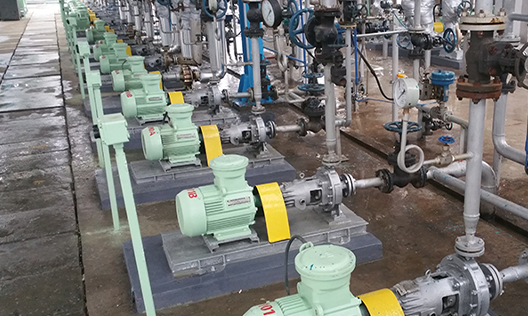
La elección de más de cientos de miles de clientes, cubriendo industrias como minería de carbón, metalurgia, química, energía, recursos hídricos, alimentos, municipalidades y protección ambiental, y exportando a Asia Sudeste, África, América y otros lugares.
-
Service
La empresa fue la primera en la industria en obtener las certificaciones internacionales del sistema de calidad ISO 9001:2008, del sistema de gestión ambiental ISO 14001 y del sistema de gestión de seguridad y salud ocupacional GB/T 28001, además de la certificación API 610 de la Asociación Estadounidense del Petróleo.
-
About us
La empresa, fundada en 1989, es una empresa nacional de alta tecnología integral que integra diseño, investigación y desarrollo, fabricación y servicios; actualmente es una empresa clave en la industria china de bombas centrífugas y una de las grandes fábricas especializadas.
-

Blogs
Con productos innovadores, calidad excepcional y servicios integrales, buscamos la verdad y la pragmática, avanzamos con iniciativa, y nos esforzamos por lograr el objetivo de ser "la marca líder en el campo de aplicación de bombas centrífugas en el país"! Raigada en Hunan, orientada a todo el país y hacia el mundo!
There’s standing water at the bottom of the open-pit mine, and the switchgear room is still three kilometers away—so why did we choose a diesel engine to power the pump?
Publication Date:
2026-03-02
Author:
Source:


Last rainy season, I conducted equipment research at an open-pit coal mine in northwest China. The mine pit had already been dug to... -120 The water level at the pit bottom suddenly increased to per hour. 800 cubic meters. The nearest distribution substation is located in the ground-level industrial yard, and laying cables down requires passing through three transport ramps. During the rainy season, the working surface may be adjusted at any time, making it simply unrealistic to move the cables along with the site. In this article, Diesel engine pump unit Manufacturer Changsha Zhonglian Pump Industry Let me share a real-life solution from a customer: There was standing water at the bottom of an open-pit mine, and the switchgear room was still three kilometers away. So why did we choose a diesel-powered pump?

Old Zhou from the equipment department at a certain open-pit mine made a direct decision: “Use a diesel engine to power the pump—no need to run electricity.”
Why must the bottom of an open-pit mine be freed from cable constraints?
The drainage challenges in open-pit mines are entirely different from those on municipal construction sites. At least in foundation excavation, there’s a relatively stable working surface; in contrast, the mining and stripping operations in open-pit mines are dynamic. The location of today’s pump could be right on the truck traffic route next month.
In this environment, cables are both a burden and a hidden danger:
1. Frequent blasting in the mining area often results in flying rocks breaking cables.
2. Crushed by a heavy truck, the cable jacket won’t last more than two weeks.
3. The distribution point is fixed, while the pump moves downward along with the mining depth—so the cable length is always insufficient.
The mid-open pump unit powered by a diesel engine integrates the power source and pump body into a single unit, which can be towed on a flatbed truck wherever it’s needed—this is the fundamental principle behind drainage operations in open-pit mines.
What exactly makes the combination of a mid-range pump and a diesel engine so powerful?
The structural feature of the mid-split pump is that its pump casing is horizontally split, and the impeller is arranged symmetrically. This design offers two significant advantages in mining environments:
First, the flow rate can be very large. A single-stage double-suction impeller is equivalent to two single-suction impellers working back-to-back, with a larger diameter. DN300 The above-mentioned units easily handle flows exceeding 1,000 cubic meters per hour. For the project we surveyed, the unit ultimately selected had a rated flow of... 1200m ³ /h Head, lift 65 The height difference from the bottom of the pit to the ground drainage ditch, completely covered by the rice.
Second, the pump boasts robust cavitation resistance. The water quality at the bottom of open-pit mines is complex, containing coal dust, rock powder, and high levels of dissolved gases. Thanks to the large-diameter inlet and low flow velocity of the mid-open pump, combined with the stable rotational speed provided by the diesel engine, cavitation damage is unlikely to occur. By contrast, multistage pumps suffer from significantly shorter impeller lifespans under such operating conditions.
When selecting diesel engines, mining applications and emergency backup systems are two different matters. We’ve equipped it with a water-cooled six-cylinder engine, and the continuous power reserve is based on... 110% Calculation—Mine equipment cannot be selected based on standard operating conditions. Given the high dust levels, high altitude, and poor heat dissipation conditions, power derating must be factored in advance.
The actual cost accounting for the diesel engine unit, compared to the scheme with an electric motor.
Old Zhou from the Equipment Department has done the math: Laying down cables, installing transformers, high-voltage switchgear, and cable laying—all in one go—costs more upfront than a diesel generator set. 40% But that’s not the point.
The real difference lies in operational flexibility. Once the electric pumps are installed, any advance of mining operations into that area will either have to bypass them—or require costly relocation. In contrast, diesel engine units can follow the mining front, and the drainage system remains unencumbered by the mining process itself. On this point, the production team at the mine has a clearer understanding than the equipment department does.
As for fuel consumption, that one... 1200m ³ /h The crew operates continuously, burning approximately diesel fuel per hour. 45 Increase. Operate annually 3000 Hourly rate, diesel price 7.5 Yuan / Annual fuel cost, calculated by increment 101 Ten thousand. Although it may seem high, it actually saves on costs associated with cable relocation and the moving of distribution equipment, making the overall cost more manageable.
Previous:
Recommended Information


Related Products
Perhaps you also want to know?
Zoomlian Pump Industry
Address:No. 210, Environmental Protection Middle Road, Yuhua Economic Development Zone, Changsha City, Hunan Province China
All rights reserved © Changsha Zoomlian Pump Co., Ltd.
This website supports IPv4 IPv6 bidirectional access
Website construction:Zhongqi Power Changsha