

-
Products
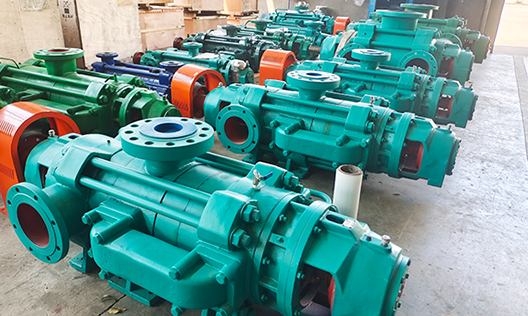
Puede fabricar 26 series de productos, incluyendo bombas de circulación para grandes centrales eléctricas, bombas de condensación para grandes centrales eléctricas, bombas petroquímicas, bombas multietapa, bombas de aguas residuales y lodo, bombas multietapa autoequilibradas, bombas de doble succión y única etapa tipo split, y bombas centrífugas de succión simple y única etapa.
-
Cases
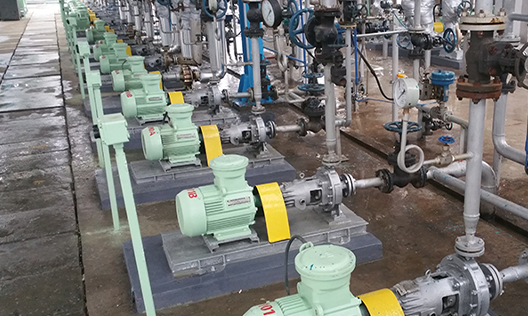
La elección de más de cientos de miles de clientes, cubriendo industrias como minería de carbón, metalurgia, química, energía, recursos hídricos, alimentos, municipalidades y protección ambiental, y exportando a Asia Sudeste, África, América y otros lugares.
-
Service
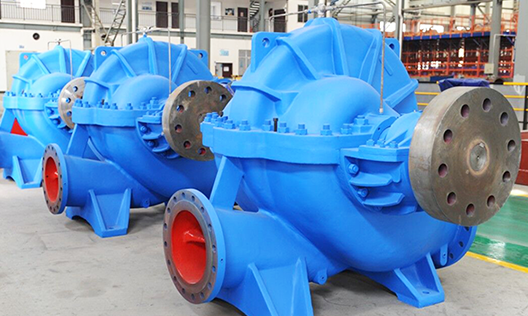
La empresa fue la primera en la industria en obtener las certificaciones internacionales del sistema de calidad ISO 9001:2008, del sistema de gestión ambiental ISO 14001 y del sistema de gestión de seguridad y salud ocupacional GB/T 28001, además de la certificación API 610 de la Asociación Estadounidense del Petróleo.
-
About us
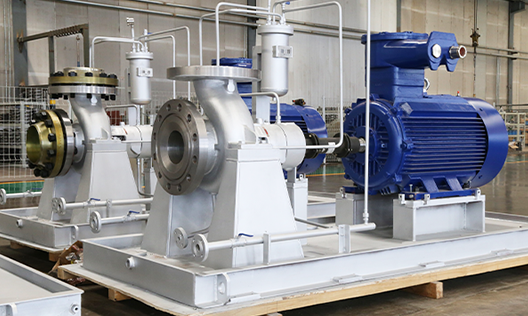
La empresa, fundada en 1989, es una empresa nacional de alta tecnología integral que integra diseño, investigación y desarrollo, fabricación y servicios; actualmente es una empresa clave en la industria china de bombas centrífugas y una de las grandes fábricas especializadas.
-
Blogs
Con productos innovadores, calidad excepcional y servicios integrales, buscamos la verdad y la pragmática, avanzamos con iniciativa, y nos esforzamos por lograr el objetivo de ser "la marca líder en el campo de aplicación de bombas centrífugas en el país"! Raigada en Hunan, orientada a todo el país y hacia el mundo!
Is the issue of water leakage from the bearing housing of the center-open, double-suction centrifugal pump serious?
Publication Date:
2026-02-24
Author:
Source:


Centrifugal double-suction Centrifugal pump Leakage from the bearing housing is by no means a “minor seepage.” If ignored, it could lead to emulsification and failure of the bearing grease in the short term, as well as accelerated wear of the shaft sleeve. In the long term, it might cause rusting and seizing of the shaft assembly. Motor Water ingress can cause short circuits; in severe cases, this may lead to unplanned equipment shutdowns and even trigger safety accidents, resulting in direct economic losses to production and operations. Many users fail to pay sufficient attention to initial leaks, which subsequently drives up maintenance costs. 3-5 times. In this article, the centrifugal pump manufacturer Changsha Zhonglian Pump Industry The Technical Department will draw on extensive engineering and operations experience. First, we’ll clearly identify the core hazards of water leaks, and then proceed with a detailed breakdown. 5 Class-based causes and standardized solutions help user organizations comprehensively address this issue.

I. Leakage from the bearing chamber 3 Major core hazard
Lubrication system failure: After moisture enters the bearing housing, the grease will emulsify and degrade (turning into a milky-white paste), losing its lubricating and cooling functions. This leads to dry friction and overheating of the bearing, causing the temperature to exceed— 80 After reaching ℃, sintering and seizing are likely to occur;
Rust on shaft components: When moisture comes into contact with metal parts such as bushings, bearings, and pump shafts, it can cause rusting and pitting corrosion, compromising mating accuracy and leading to excessive radial runout of the pump shaft. 0.1mm Afterward, it will exacerbate seal wear and lead to “leakage.” - Wear and tear - a vicious cycle of "more severe leakage";
Secondary failure risk: If leaked moisture penetrates the motor along the shaft system, it could cause short circuits and burn out the motor windings. Moreover, prolonged exposure of the mid-opening surface to moisture can accelerate gasket aging and lead to bolt corrosion and seizing, thereby increasing the difficulty of subsequent maintenance.
II. Leaking 5 Class Core Causes and Solutions
(1) Misalignment in shaft seal selection or insufficient assembly accuracy.
For the bearing chamber of a center-open, double-suction centrifugal pump, the commonly used skeleton oil seal—when not matched to the pump shaft’s rated speed (e.g., using a standard low-speed oil seal in high-speed operating conditions) or when the runout at the sealing cavity end face exceeds the allowable tolerance during assembly (exceeding...)—can lead to leakage or other performance issues. 0.5 mu m/mm ), which can cause uneven stress on the oil seal lip and rapid wear. The depth of scratches on the bushing surface exceeds... 0.05mm or the wear exceeds 0.1mm At the same time, it can also compromise the sealing and bonding effect.
Solution: Select an appropriate oil seal based on the pump shaft speed (for high-speed operating conditions, prioritize PTFE-reinforced fluororubber oil seals). Before assembly, use a dial indicator to check the runout of the sealing cavity; any areas exceeding the tolerance should be machined and repaired first. The surface roughness of the shaft sleeve must meet the specified requirements. Ra0.8-1.6 mu m , wear and tear / Replace if the scratch exceeds the standard. Use a dedicated press tool to evenly press-fit the oil seal, avoiding deformation of the lip.
(2) Leakage caused by failure of the middle opening seal.
The mating surface between the bearing housing and the pump casing is sealed using a dedicated gasket. If the gasket material is incompatible with the operating conditions—for example, using a standard rubber gasket in high-temperature environments—or if the gasket has aged and cracked, or if the bolts are not tightened diagonally in three stages, micrometer-level gaps may develop at the mating surface. Additionally, some users, after maintenance, fail to reinstall the locating pins, which can cause misalignment of the mating surface and further widen the leakage pathways.
Solution: Remove the bolts at the mid-opening flange, clean the sealing surfaces of rust and adhesive residues, and replace the gasket with an appropriate one (choose a flexible graphite-reinforced gasket for high-temperature conditions, and a metal-wound gasket for normal operating conditions). Tighten the bolts diagonally in three stages using a torque wrench to ensure uniform preload. If necessary, apply oil-resistant sealant. Reinstall the locating pins and verify alignment accuracy.
(3) Water infiltration caused by defects in the water-stopping structure.
If the water-blocking disc at the front end of the bearing chamber is not designed with a return groove, or if the clearance between it and the bearing press cover exceeds the specified limit, 0.5mm The medium will bypass the waterstop and infiltrate. A properly designed waterstop structure should use the pressure difference between the annular groove and the return groove to effectively block water. If this structural feature is missing or the return groove becomes blocked, the waterstop effectiveness will be significantly reduced.
Solution: Machine on the inner side of the bearing press cover. 60 The inclined return water trough should be at the same elevation as the lowest point on the outer circumference of the water-stop disc. Clean out impurities from the return water trough and adjust the mating clearance to... 0.2-0.3mm A water-blocking groove is added to the pump’s main shaft, creating a double-layer protection that blocks the path of backflow.
(4) Emulsification and overflow caused by improper use of grease
Bearing housings are typically designed for grease lubrication. If a conventional lithium-based grease with poor water resistance is selected, or if the amount of grease filled exceeds the bearing housing’s capacity, 2/3 During operation, the grease will heat up, expand, and emulsify, leading to degradation. The pressure generated will force the emulsified grease out, which can easily be mistaken for “leakage.”
Solution: Drain the emulsified grease, flush the bearing housing with kerosene and allow it to dry completely, then replace it with a composite calcium sulfonate grease that has strong water resistance (water washout rate ≤). 5% ), the filling amount is controlled within 1/2–2/3 Volume; drill φ at the bottom of the bearing chamber. 3mm Drainage holes should be used to promptly remove accumulated water. During routine inspections, if grease is found to have turned white or formed clumps, it should be replaced immediately.
(5) Increased precision deviations in the shaft system exacerbate sealing failure.
The double-bearing support structure has stringent requirements for coaxiality; the coupling's coaxiality deviation exceeds the allowable tolerance. 0.05mm or excessive radial runout of the pump shaft caused by bearing wear 0.1mm This will cause uneven stress on the shaft seal lip. Loosening of the bearing outer race and deformation of the bearing housing can also indirectly lead to shaft misalignment, accelerating seal failure.
Solution: Use a dial indicator to correct the coupling’s coaxiality (deviation ≤). 0.05mm ); bearing clearance exceeds 0.03mm Replace it directly when necessary. Use a dial indicator to check the radial runout of the pump shaft; if the runout exceeds the specified tolerance, straighten the shaft. Inspect the bearing housing for deformation and, if required, machine and repair it to ensure installation accuracy.
Recommended Information


Related Products
Perhaps you also want to know?
Zoomlian Pump Industry
Address:No. 210, Environmental Protection Middle Road, Yuhua Economic Development Zone, Changsha City, Hunan Province China
All rights reserved © Changsha Zoomlian Pump Co., Ltd.
This website supports IPv4 IPv6 bidirectional access
Website construction:Zhongqi Power Changsha