

-
Products
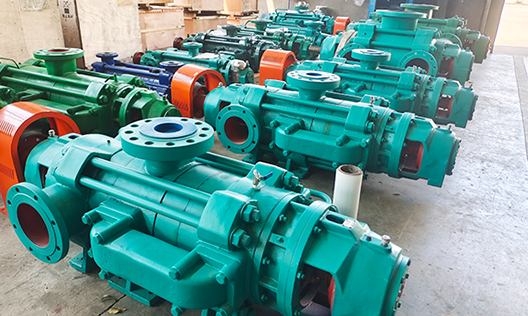
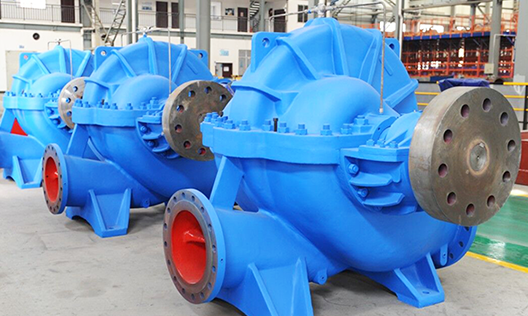
Puede fabricar 26 series de productos, incluyendo bombas de circulación para grandes centrales eléctricas, bombas de condensación para grandes centrales eléctricas, bombas petroquímicas, bombas multietapa, bombas de aguas residuales y lodo, bombas multietapa autoequilibradas, bombas de doble succión y única etapa tipo split, y bombas centrífugas de succión simple y única etapa.
-
Cases
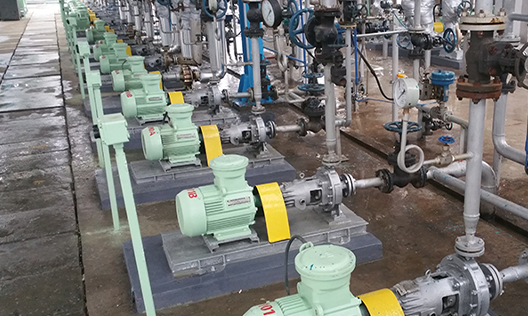
La elección de más de cientos de miles de clientes, cubriendo industrias como minería de carbón, metalurgia, química, energía, recursos hídricos, alimentos, municipalidades y protección ambiental, y exportando a Asia Sudeste, África, América y otros lugares.
-
Service
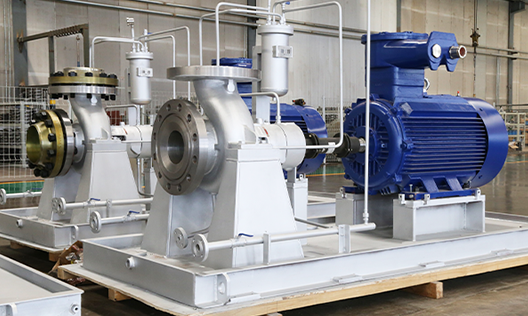
La empresa fue la primera en la industria en obtener las certificaciones internacionales del sistema de calidad ISO 9001:2008, del sistema de gestión ambiental ISO 14001 y del sistema de gestión de seguridad y salud ocupacional GB/T 28001, además de la certificación API 610 de la Asociación Estadounidense del Petróleo.
-
About us
La empresa, fundada en 1989, es una empresa nacional de alta tecnología integral que integra diseño, investigación y desarrollo, fabricación y servicios; actualmente es una empresa clave en la industria china de bombas centrífugas y una de las grandes fábricas especializadas.
-

Blogs
Con productos innovadores, calidad excepcional y servicios integrales, buscamos la verdad y la pragmática, avanzamos con iniciativa, y nos esforzamos por lograr el objetivo de ser "la marca líder en el campo de aplicación de bombas centrífugas en el país"! Raigada en Hunan, orientada a todo el país y hacia el mundo!
How exactly should the drainage pipe for a multi-stage drainage pump used in mining be selected?
Publication Date:
2026-02-12
Author:
Source:


Anyone involved in mine drainage projects knows full well that the drainage pipelines for multi-stage drainage pumps used in mining aren't just any old pipe you can slap together. If you choose the wrong pipe, at best you'll face frequent clogging and leaks, which will impair drainage efficiency; at worst, insufficient pressure or damaged pipe walls could lead to safety incidents. Not only will such rework be costly and time-consuming, but it’ll also disrupt normal mine operations. Today, pump manufacturers specializing in mining applications... Changsha Zhonglian Pump Industry Technical engineers, fully aligned with coal mine industry standards, provide a straightforward and practical explanation of how to properly select drainage pipelines for multi-stage drainage pumps used in mining operations—offering valuable guidance for mining enterprise users.

First, let’s clarify the core premise: The selection of drainage pipelines for mining applications must be centered on the operational requirements of multi-stage drainage pumps used in mines, while strictly adhering to industry standards such as the “Design Code for Underground Drainage Pump Stations and Drainage Pipelines in Coal Mines” and the “Technical Specifications for Drainage during the Production Period of Coal Mines.” Emphasis should be placed on four key factors: pressure resistance, corrosion resistance, wear resistance, and ease of maintenance. Additionally, the pipeline design must match the mine’s water inflow rate and drainage head. After all, underground working conditions are complex; high pressure, severe abrasion, and corrosive water media (including coal slurry and mine tailings) are commonplace. If even one aspect is overlooked, it could leave hidden safety hazards.
Many practitioners, when selecting pipe sizes, tend to fall into the trap of focusing solely on pipe diameter while neglecting operating conditions, which often leads to a mismatch between the pipeline and the pump—either the pipe diameter is too large, resulting in a slow flow rate that causes coal slime and slag to accumulate and clog the pipe, thereby increasing energy consumption; or the pipe diameter is too small, causing the flow rate to be excessively high, accelerating pipe wall wear and, due to excessive resistance, reducing the pump’s pressure to the point where it can’t meet drainage requirements. The correct selection logic should start with the three core dimensions—material, pipe diameter, and pressure rating—and then incorporate additional details such as valves and installation methods, ensuring that the right pipeline is selected in one step.
First, material selection: We prioritize adaptation to the complex underground working conditions and reject a “one-size-fits-all” approach. Since water media and wear levels vary across different mines, the choice of pipeline materials must also be tailored accordingly. The key is to withstand the corrosive effects of underground water as well as the abrasive wear caused by coal slurry and mining slag. The commonly used materials fall into three categories, each suited to specific application scenarios. None of our claims are exaggerated; all are closely aligned with real-world applications.
1. Seamless steel pipes (recommended mainstream selection): are divided into ordinary seamless steel pipes and stainless steel seamless pipes. The material of ordinary seamless steel pipes is mostly... 20# Steel boasts high compressive strength and uniform wall thickness, enabling it to withstand high-pressure impacts. It is well-suited for conventional drainage applications in most mines and offers excellent cost-performance. Stainless steel seamless steel pipe ( 304、316 Material: It boasts superior corrosion resistance, making it ideal for scenarios where mine groundwater has high sulfur content and is highly corrosive. Although the cost is slightly higher, it reduces the frequency of future replacements, ensuring more hassle-free long-term operation and maintenance. It’s important to note that the weld coefficient for seamless steel pipes must be determined according to... 1 Calculate to ensure that the pipe wall strength meets the required standards and prevent leaks caused by damage to the weld seams.
2. Composite steel pipe (suitable for high-abrasion environments): A common type is polyethylene-composite steel pipe (with a seamless steel pipe as the base material). The outer polyethylene layer provides corrosion resistance, while the inner seamless steel pipe ensures compressive strength. Additionally, its smooth surface helps reduce coal slime deposition, making it ideal for mines with high concentrations of coal slime and slag—for example, the disaster-resistant drainage system at the Hetao Yu Coal Mine has specifically chosen this type of pipe. D325 Composite steel pipes, suitable for drainage applications involving high abrasion and high pressure. The advantage of these pipes lies in their ability to simultaneously withstand high pressure and resist abrasion, resulting in a longer service life compared to conventional steel pipes. 30% The above is suitable for large-scale mines and deep-well drainage scenarios.
3. Wear-resistant plastic pipe (suitable for low-pressure shallow well applications): for example, PE Pipes are lightweight, easy to install, and have excellent corrosion resistance; however, they have relatively low compressive strength and are suitable only for shallow wells and low-pressure drainage applications (pressure ≤). 1.0MPa ), and you need to select the appropriate one. SDR Series ( SDR The smaller the value, the thicker the pipe wall and the stronger the compression resistance—for example: SDR11 Series PE Pipe, with superior compression resistance. SDR17 Series—When used underground, avoid collisions and compression to prevent damage to the pipe walls.
Second, pipe diameter selection: Perform precise calculations based on flow rate and flow velocity, adhering to industry standards. The pipe diameter is the core factor in selection and directly affects drainage efficiency and pipeline lifespan. Refer to industry standards for the calculation formulas: DN ≥ 27 √ Q ( DN For the nominal diameter, Q For the pump’s operating flow rate, it must also meet the velocity requirements to avoid excessively high or low flow velocities.
Specific selection points: The diameter of the suction pipe must not be smaller than the diameter of the pump’s suction inlet; it is preferable to make it larger. 1 Level~ 3 Level, the flow velocity within the pipe should be taken as: 0.8m/s ~ 1.5m/s This ensures that the suction pipe does not experience excessive resistance and also prevents coal slime from settling. The flow rate of the drainage pipe must be controlled within... 1.2m/s ~ 2.0m/s This flow rate range can both reduce the deposition of coal slime and slag and prevent excessive flow rates from accelerating pipe wall wear. For example, the operating flow rate of a multi-stage drainage pump at a certain mine is... 420m ³ /h , the calculated pipe diameter is approximately 0.287m , can be selected in actual selection. DN300mm (Outer diameter D325mm pipes that match actual drainage requirements. Meanwhile, the main drainage system must be equipped with both a working pipeline and a backup pipeline; the capacity of the working pipeline should be sufficient to support the operation of the working pumps. 20h Internal mine drainage 24h The normal inflow rate and the combined capacity of the working and standby pipelines should be able to accommodate both the working and standby pumps. 20h Internal mine drainage 24h The maximum flow rate.
Third, selection of pressure rating: The selected pressure rating must be higher than the pump’s maximum working pressure, with ample safety margin reserved. Multi-stage drainage pumps for mining applications typically have relatively high discharge pressures—especially in deep-well drainage—so the nominal pressure rating of the pipeline ( PN ) Must be greater than or equal to the pressure value at the pump’s zero flow rate, and also according to the working pressure. 1.1 Double the safety margin to prevent pipe wall damage and leakage caused by pressure fluctuations. For example, the maximum working pressure of the pump is... 9.5MPa When selecting, the nominal pressure should be ≥ 10.5MPa For the pipeline, the disaster-resistant drainage system at Hetaoyu Coal Mine was designed and selected according to this standard, with a wall thickness that meets the requirements. 23mm of the D325 Molded composite steel pipe, ensuring it can withstand high-pressure impacts.
In addition, the calculation of pipe wall thickness must also comply with relevant standards and take into account additional thickness for manufacturing negative deviations and corrosion. The calculation formula is δ. = ( p × DW ) / ( 2 ×psi× [ sigma ] ) + c (δ is the calculated wall thickness of the pipe, p To calculate the maximum working pressure of the pipe section, DW where D is the outer diameter of the pipe, and ψ is the weld coefficient for the pipeline. [ sigma ] For the required stress of the pipe material, c Add extra thickness for corrosion protection to ensure that the pipe wall strength can withstand high downhole pressures and abrasion.
Fourth, detailed supplementation: valves, installation, and maintenance—none of these can be overlooked. When selecting equipment, it’s crucial not only to choose the right pipe itself but also to match it with appropriately designed valves and installation methods, thereby avoiding detail-related mistakes that could compromise performance.
1. Valve Selection: A gate valve and a check valve (or a slow-closing check valve with minimal resistance) should be installed on the discharge pipe of the pump. When using submersible pumps, the slow-closing check valve with minimal resistance must be waterproof. In disaster-resistant drainage systems equipped with a single pump and a single pipe, a gate valve is not required on the discharge pipe of the submersible pump. The selection of gate valves must comply with relevant standards, for example: PN ≥ 2.5MPa And DN ≥ 250mm、 PN ≥ 4.0MPa And DN ≥ 200mm At this time, electric gate valves or electric hydraulically controlled gate valves should be selected. The pressure rating of all valves shall not be lower than the pressure value at the pump’s zero flow rate.
2. Pipeline Laying: Underground pipeline laying shall follow the principle of "shortest pipeline route and ease of maintenance," minimizing bends and diameter changes. The bending radius of bends should not be too small to avoid increasing water flow resistance and accelerating pipe wall wear. Pipeline fixing must be secure, using supports or hangers to prevent loosening or damage caused by vibrations from pump operation. Meanwhile, main pipelines at drainage pump stations should be equipped with drain pipes and drain valves, whose diameters should ideally be... 50mm ~ 80mm To facilitate later maintenance and drainage.
3. Post-installation maintenance: When selecting piping systems, consider their maintainability. Prioritize pipe types whose components are interchangeable and easy to disassemble, such as seamless steel pipes and composite steel pipes. In the later stages, regular rust removal and anti-corrosion treatments can extend the service life of these pipes. Additionally, sufficient space should be reserved for inspection, maintenance, and replacement purposes, facilitating easier access and reducing downtime.
To summarize: When selecting drainage pipelines for multi-stage mining drainage pumps, there is no “best” model—only the “most suitable” one. The key lies in first clearly defining the mine’s drainage conditions (such as water inflow rate, drainage head, corrosivity of the water medium, and degree of abrasion), then strictly adhering to industry standards. Starting with the three core dimensions—material, pipe diameter, and pressure rating—and carefully matching them with appropriate valves and installation methods, while taking into account safety, efficiency, and maintenance costs, you can effectively avoid rework and potential safety hazards.
Zhonglian Pump Industry is deeply committed. Mining drainage pump In the field of pipeline selection and matching, we offer over 800 specifications and models. Coal Safety Certification With mining safety certification and a deep understanding of various mine drainage conditions, we can provide precise pipe selection recommendations tailored to the specific requirements of each mine, taking into account the model of multi-stage drainage pumps designed for mining applications. All our selection solutions comply with industry standards and have been rigorously validated through numerous mine projects, ensuring perfect compatibility between pipes and pumps and helping mines achieve safe, efficient, and energy-saving drainage operations. If you're unsure about how to choose the right drainage pipes for your multi-stage mining drainage pump, feel free to reach out to us. Our expert team is here to offer you one-on-one selection guidance, helping you avoid common pitfalls and ensuring a hassle-free, successful implementation.
Recommended Information


Related Products
Perhaps you also want to know?
Zoomlian Pump Industry
Address:No. 210, Environmental Protection Middle Road, Yuhua Economic Development Zone, Changsha City, Hunan Province China
All rights reserved © Changsha Zoomlian Pump Co., Ltd.
This website supports IPv4 IPv6 bidirectional access
Website construction:Zhongqi Power Changsha