

-
Products
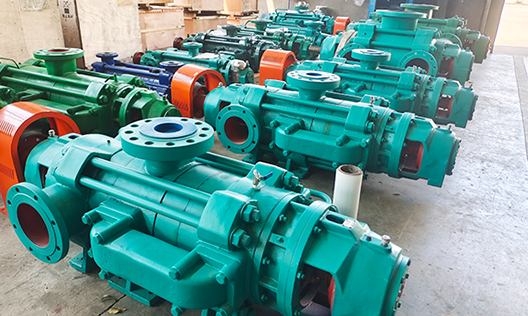
Puede fabricar 26 series de productos, incluyendo bombas de circulación para grandes centrales eléctricas, bombas de condensación para grandes centrales eléctricas, bombas petroquímicas, bombas multietapa, bombas de aguas residuales y lodo, bombas multietapa autoequilibradas, bombas de doble succión y única etapa tipo split, y bombas centrífugas de succión simple y única etapa.
-
Cases
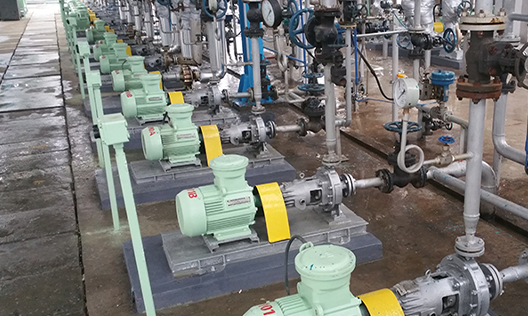
La elección de más de cientos de miles de clientes, cubriendo industrias como minería de carbón, metalurgia, química, energía, recursos hídricos, alimentos, municipalidades y protección ambiental, y exportando a Asia Sudeste, África, América y otros lugares.
-
Service
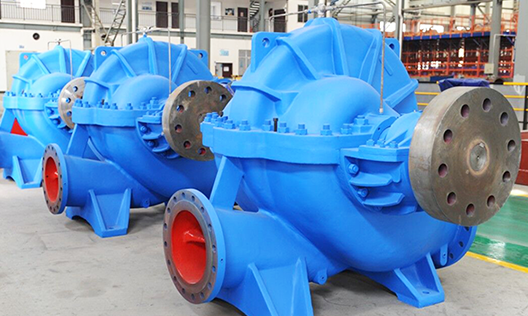
La empresa fue la primera en la industria en obtener las certificaciones internacionales del sistema de calidad ISO 9001:2008, del sistema de gestión ambiental ISO 14001 y del sistema de gestión de seguridad y salud ocupacional GB/T 28001, además de la certificación API 610 de la Asociación Estadounidense del Petróleo.
-
About us
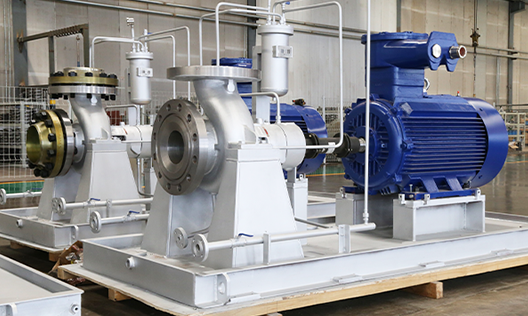
La empresa, fundada en 1989, es una empresa nacional de alta tecnología integral que integra diseño, investigación y desarrollo, fabricación y servicios; actualmente es una empresa clave en la industria china de bombas centrífugas y una de las grandes fábricas especializadas.
-

Blogs
Con productos innovadores, calidad excepcional y servicios integrales, buscamos la verdad y la pragmática, avanzamos con iniciativa, y nos esforzamos por lograr el objetivo de ser "la marca líder en el campo de aplicación de bombas centrífugas en el país"! Raigada en Hunan, orientada a todo el país y hacia el mundo!
What is the difference between a single-suction centrifugal pump and a double-suction centrifugal pump?
Publication Date:
2025-12-16
Author:
Source:


Centrifugal pump As core fluid-handling equipment used in industries such as industrial production, municipal water supply, and hydraulic engineering, centrifugal pumps can be broadly categorized into two main types based on their water intake method: single-suction centrifugal pumps and double-suction centrifugal pumps. These two types differ significantly in terms of structural design, performance parameters, and applicable scenarios. Clearly understanding these differences is crucial for making accurate equipment selections and ensuring the stable operation of the system. Below, Changsha Zhonglian Pump Industry, a leading manufacturer of centrifugal pumps, will provide a detailed comparison of the key distinctions between single-suction and double-suction centrifugal pumps, offering users professional guidance for selecting and applying centrifugal pumps.

Please click on the image to learn about the model specifications and product details of various [double-suction centrifugal pumps] from Zhonglian Pump Industry.
The structural design represents the most fundamental difference between single-suction centrifugal pumps and double-suction centrifugal pumps, a distinction that directly determines their subsequent differences in performance and application. The core feature of a single-suction centrifugal pump is that the impeller draws water from only one side—liquid enters the pump chamber from one side of the impeller—and the impeller is equipped with just a single set of suction ports. Correspondingly, the pump body structure of a single-suction centrifugal pump is relatively compact; its shaft seal assembly needs to be arranged on only one side, resulting in fewer overall components and a highly simplified structure. Single-suction centrifugal pumps can be further categorized into single-suction single-stage centrifugal pumps and single-suction multi-stage centrifugal pumps. In contrast, double-suction centrifugal pumps adopt a design in which the impeller draws water from both sides simultaneously—liquid enters the pump chamber from both sides of the impeller, and each end of the impeller is equipped with a suction port. To accommodate the dual-sided water intake requirement, the pump body typically features a horizontal split-case design, and the shaft seal assembly must be arranged on both sides. Moreover, the pump shaft is usually supported at both ends, making the overall structural complexity higher than that of a single-suction centrifugal pump.

Please click on the image to learn about the model specifications and product details of various [single-suction single-stage centrifugal pumps] from Zhonglian Pump Industry.
Due to differences in structural design, single-suction centrifugal pumps and double-suction centrifugal pumps exhibit distinct differences in their core performance parameters. In terms of flow rate, since single-suction centrifugal pumps intake water from only one side, their impeller has limited suction capacity, resulting in a relatively narrow flow range. They are typically suited for applications involving small flow rates, with a common flow range of: 5-200m ³ /h (Varies depending on the model.) Thanks to its dual-sided water intake, the double-suction centrifugal pump features a larger inlet area for the impeller, resulting in higher water suction efficiency and a significantly wider flow range compared to single-suction centrifugal pumps. The typical flow range is: 50-10000m ³ /h It is more suitable for high-flow transportation needs.

Please click on the image to learn about the model specifications and product details of Zhonglian Pump Industry’s various [single-suction multistage centrifugal pumps].
In addition to flow rate, cavitation resistance and operational stability are also important indicators of performance differences between the two types of pumps. Cavitation is a common failure in centrifugal pump operation; it can damage the impeller and shorten the pump’s service life. In single-suction centrifugal pumps, when water enters from only one side, the pressure distribution at the impeller inlet tends to be uneven, making it easy for localized low-pressure zones to form and reducing the pump’s cavitation resistance. Therefore, it is crucial to strictly control the installation height and inlet operating conditions to prevent cavitation. In contrast, double-suction centrifugal pumps, with water intake from both sides, ensure a more uniform pressure distribution at the impeller inlet, effectively reducing the likelihood of localized low-pressure zones forming. As a result, they exhibit superior cavitation resistance, a wider range of acceptable installation heights, and better adaptability to varying inlet conditions.
In terms of operational stability, a single-suction centrifugal pump with water intake on only one side generates a certain axial thrust. Although the pump body is equipped with a balancing device to counteract this axial force, under high-pressure and high-flow conditions, there still remains a risk of axial force imbalance, resulting in relatively higher operational vibration. In contrast, a double-suction centrifugal pump, with water intake on both sides, allows the axial forces generated on each side to cancel each other out, eliminating the need for additional complex balancing devices. As a result, the axial force balance is significantly improved, leading to lower vibration and noise levels during operation and enhanced overall stability—making it particularly well-suited for applications involving long-term, continuous operation.
The differences in performance parameters directly determine the division of application scenarios between single-suction centrifugal pumps and double-suction centrifugal pumps. Only by selecting the appropriate type of centrifugal pump based on actual application requirements can we ensure the efficiency and stability of the conveying system. Thanks to their compact structure, small size, light weight, and low manufacturing costs, single-suction centrifugal pumps are widely used in applications involving small flow rates and medium-to-low head requirements—for example, feedwater supply for small industrial boilers, laboratory water supply, small-scale irrigation systems, and pressurized water supply for residential buildings. In these scenarios, where flow rate demands are relatively low and there are stringent requirements for equipment footprint and cost control, the advantages of single-suction centrifugal pumps can be fully realized.
Double-suction centrifugal pumps, with their characteristics of high flow rate, high head, excellent cavitation resistance, and stable operation, are primarily used in high-flow applications such as raw water conveyance in municipal tap water plants, sewage lifting in large-scale wastewater treatment plants, circulating water systems in the power industry, cooling water transport in the metallurgical industry, large-scale agricultural irrigation projects, and large-scale fluid transport in the petrochemical industry. These applications place extremely high demands on both flow rate and operational stability, and double-suction centrifugal pumps are better equipped to meet the long-term, highly efficient operational requirements of such systems.
In terms of installation, maintenance, and cost, there are also certain differences between the two types, which are important factors to consider when selecting a pump. Single-suction centrifugal pumps have a simple structure with fewer components, making their installation process relatively straightforward and placing lower demands on the installation site. During routine maintenance, disassembly and inspection are easy, the maintenance cycle is short, and maintenance costs are low. In contrast, double-suction centrifugal pumps have a more complex structure and a greater number of components. In particular, installing horizontal split-case pumps requires higher precision, resulting in a relatively longer installation period. During maintenance, the disassembly and reassembly procedures are more complicated, demanding higher professional skills from maintenance personnel. Moreover, the cost of replacing parts is higher, leading to overall higher maintenance costs compared to single-suction centrifugal pumps.
In summary, the differences between single-suction centrifugal pumps and double-suction centrifugal pumps span multiple dimensions, including structure, performance, application scenarios, and installation and maintenance. When selecting a pump, it is essential to comprehensively evaluate factors such as the flow rate requirements of the actual conveying system, head requirements, medium characteristics, installation conditions, and cost budget. For applications involving small flow rates, medium-to-low head requirements, and cost sensitivity, single-suction centrifugal pumps should be prioritized. Conversely, for applications requiring large flow rates, high head, and high demands on operational stability and cavitation resistance, double-suction centrifugal pumps are the better choice.
Previous:
Recommended Information


Related Products
Perhaps you also want to know?
Zoomlian Pump Industry
Address:No. 210, Environmental Protection Middle Road, Yuhua Economic Development Zone, Changsha City, Hunan Province China
All rights reserved © Changsha Zoomlian Pump Co., Ltd.
This website supports IPv4 IPv6 bidirectional access
Website construction:Zhongqi Power Changsha