

-
Products
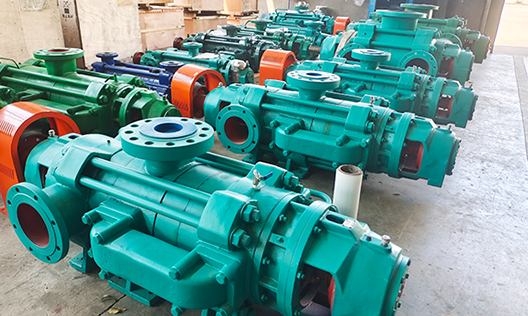
Puede fabricar 26 series de productos, incluyendo bombas de circulación para grandes centrales eléctricas, bombas de condensación para grandes centrales eléctricas, bombas petroquímicas, bombas multietapa, bombas de aguas residuales y lodo, bombas multietapa autoequilibradas, bombas de doble succión y única etapa tipo split, y bombas centrífugas de succión simple y única etapa.
-
Cases
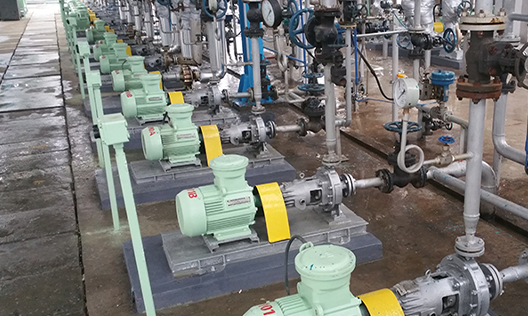
La elección de más de cientos de miles de clientes, cubriendo industrias como minería de carbón, metalurgia, química, energía, recursos hídricos, alimentos, municipalidades y protección ambiental, y exportando a Asia Sudeste, África, América y otros lugares.
-
Service
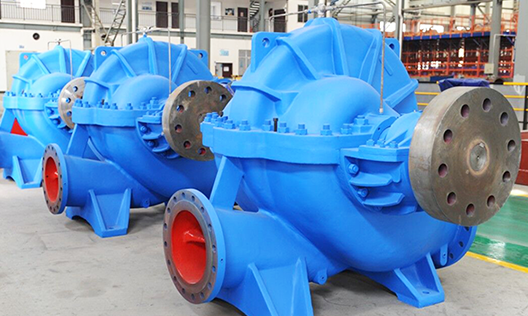
La empresa fue la primera en la industria en obtener las certificaciones internacionales del sistema de calidad ISO 9001:2008, del sistema de gestión ambiental ISO 14001 y del sistema de gestión de seguridad y salud ocupacional GB/T 28001, además de la certificación API 610 de la Asociación Estadounidense del Petróleo.
-
About us
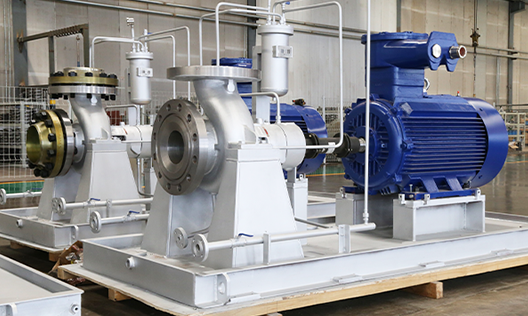
La empresa, fundada en 1989, es una empresa nacional de alta tecnología integral que integra diseño, investigación y desarrollo, fabricación y servicios; actualmente es una empresa clave en la industria china de bombas centrífugas y una de las grandes fábricas especializadas.
-

Blogs
Con productos innovadores, calidad excepcional y servicios integrales, buscamos la verdad y la pragmática, avanzamos con iniciativa, y nos esforzamos por lograr el objetivo de ser "la marca líder en el campo de aplicación de bombas centrífugas en el país"! Raigada en Hunan, orientada a todo el país y hacia el mundo!
Why does 130° high-temperature soft water need to be delivered by a sub-high-pressure boiler feed pump?
Publication Date:
2025-06-19
Author:
Source:


We all know that pump selection needs to be based on operating parameters such as flow rate, head, medium, and temperature. The medium temperature is also an important factor affecting pump selection.
When the medium temperature reaches 130°C, we need to understand several points. First is the change in physical properties of high-temperature water—at 130°C, the saturated vapor pressure reaches 2.7 MPa, requiring pressurization to maintain the liquid state; second is engineering safety requirements to prevent flash steam erosion damage to the pump body; finally, system compatibility, as the boiler operating pressure determines that the feed water pressure must be higher. Special attention should be paid to users possibly confusing the concepts of "operating pressure" and "head"; the relationship between NPSHa and NPSHr should be used to explain anti-cavitation design.
At the same time, 130°C is the critical temperature point for mechanical seals, so we must carefully choose the type and model of the seal to continue using.
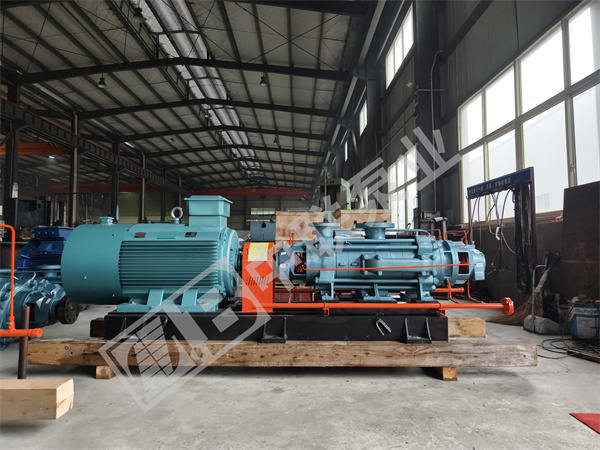
[For more information about sub-high pressure boiler feed pumps, boiler feed pump models and parameters, please click the image above to learn more]
The essence of transporting 130°C high-temperature soft water is to lock the water in the liquid phase through pressurization, and the sub-high pressure boiler feed pump:
Provides sufficient pressure to suppress vaporization;
Designs anti-cavitation flow channels to cope with pressure fluctuations;
Uses high-temperature reinforced structures to ensure reliability.
This is a dual rigid requirement of thermodynamic laws and engineering safety, which ordinary pumps cannot replace.
Transporting 130°C high-temperature soft water must use sub-high pressure boiler feed pumps (operating pressure usually 5.4~9.8 MPa). The core reason is to avoid fluid vaporization, prevent cavitation damage, and meet boiler operating pressure requirements.
Latest News
Related Products
Perhaps you also want to know?
Zoomlian Pump Industry
Address:No. 210, Environmental Protection Middle Road, Yuhua Economic Development Zone, Changsha City, Hunan Province China
All rights reserved © Changsha Zoomlian Pump Co., Ltd.
This website supports IPv4 IPv6 bidirectional access
Website construction:Zhongqi Power Changsha