

-
Products
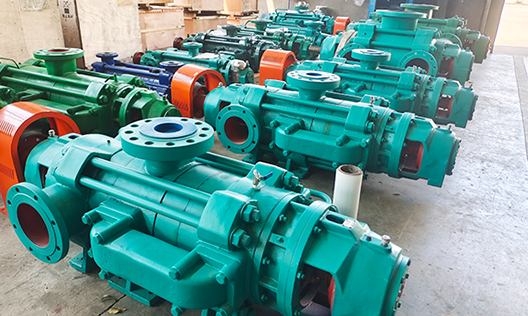
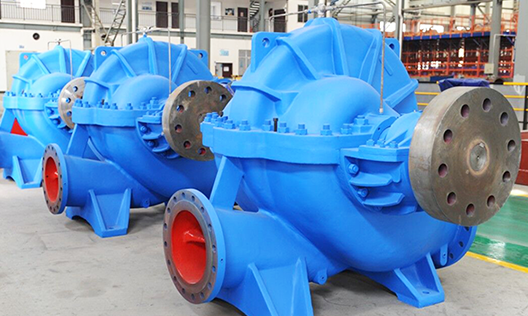
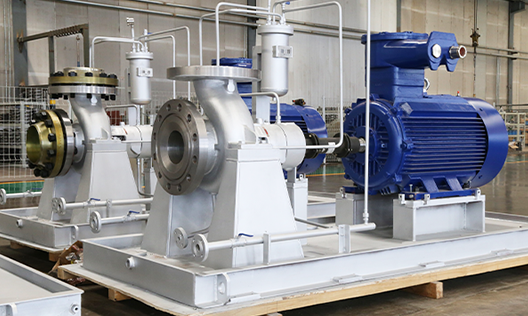
Puede fabricar 26 series de productos, incluyendo bombas de circulación para grandes centrales eléctricas, bombas de condensación para grandes centrales eléctricas, bombas petroquímicas, bombas multietapa, bombas de aguas residuales y lodo, bombas multietapa autoequilibradas, bombas de doble succión y única etapa tipo split, y bombas centrífugas de succión simple y única etapa.
-
Cases
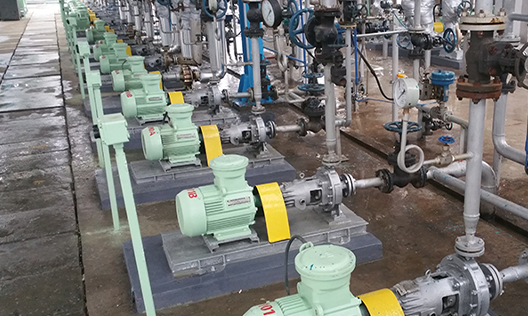
La elección de más de cientos de miles de clientes, cubriendo industrias como minería de carbón, metalurgia, química, energía, recursos hídricos, alimentos, municipalidades y protección ambiental, y exportando a Asia Sudeste, África, América y otros lugares.
-
Service
La empresa fue la primera en la industria en obtener las certificaciones internacionales del sistema de calidad ISO 9001:2008, del sistema de gestión ambiental ISO 14001 y del sistema de gestión de seguridad y salud ocupacional GB/T 28001, además de la certificación API 610 de la Asociación Estadounidense del Petróleo.
-
About us
La empresa, fundada en 1989, es una empresa nacional de alta tecnología integral que integra diseño, investigación y desarrollo, fabricación y servicios; actualmente es una empresa clave en la industria china de bombas centrífugas y una de las grandes fábricas especializadas.
-

Blogs
Con productos innovadores, calidad excepcional y servicios integrales, buscamos la verdad y la pragmática, avanzamos con iniciativa, y nos esforzamos por lograr el objetivo de ser "la marca líder en el campo de aplicación de bombas centrífugas en el país"! Raigada en Hunan, orientada a todo el país y hacia el mundo!
The working principle of a self-balancing multistage centrifugal pump (including an animated video)
Publication Date:
2025-11-24
Author:
Source:


Self-balanced multistage centrifugal pump As an efficient and energy-saving device in the industrial fluid transportation field, it replaces the traditional balance disc and balance drum. Horizontal Multistage Centrifugal Pump The upgraded alternative product boasts a core advantage: its innovative structural design achieves self-balancing of axial forces, significantly enhancing operational stability and energy efficiency. Widely used in high-pressure liquid transfer applications across industries such as mining, petrochemicals, and power generation, this equipment’s operating principle revolves around two key elements—fluid energy enhancement and axial force self-balancing—while optimized hydraulic modeling minimizes energy losses, enabling cost control throughout the equipment’s entire lifecycle. In this article, the centrifugal pump manufacturer Changsha Zhonglian Pump Industry Let me introduce the working principle of the self-balancing multistage centrifugal pump. Here’s an animated video that will help you gain a more intuitive understanding.
I. Basic Structure and Fluid Transport Process
The self-balancing multistage centrifugal pump features a horizontal sectional design and consists primarily of components such as the suction section, middle section, discharge section, forward impeller, reverse impeller, forward guide vanes, reverse guide vanes, pump shaft, thrust bearing, and sealing assembly. The basic fluid delivery process follows the general principle of centrifugal pumps: the impeller rotates to perform work on the liquid, converting mechanical energy into both kinetic energy and pressure energy of the fluid.
After the motor drives the pump shaft to rotate, liquid enters the pump's suction section from the intake sump, first flowing through the forward impeller. Under the centrifugal force generated by the impeller, the liquid is flung toward the outer edge of the impeller, resulting in a significant increase in both flow velocity and pressure.
After the high-pressure liquid enters the guide vanes, its flow velocity gradually decreases, converting kinetic energy into pressure energy, and then flows through the middle section into the secondary inlet section.
After the liquid enters the impeller, it repeats the aforementioned energy conversion process. The diffuser vanes then further transform kinetic energy into pressure energy, ultimately delivering the fluid continuously through the vertical outlet in the discharge section to the target pipeline.
Unlike traditional multistage pumps, the self-balancing design addresses the issue of axial force imbalance simultaneously during fluid transport, thanks to the symmetrical arrangement of forward and reverse impellers.
II. The Core Mechanism of Axial Force Self-Balancing
When a multistage centrifugal pump is running, the pressure difference across the impeller generates an axial force acting along the pump shaft. If this force isn't effectively balanced, it can lead to impeller movement, wear on the sleeve bearings, or even rotor seizure—this issue is one of the primary causes of failures in conventional multistage pumps. However, the innovative design of the self-balancing multistage centrifugal pump addresses this problem at its root.
The symmetrical impeller cancels axial forces on the main shaft: By dividing the impeller into two sets—positive and reverse—and arranging them symmetrically, the axial forces generated by each set during operation are equal in magnitude but opposite in direction, thus achieving complete cancellation of the axial force on the main shaft. This design eliminates the need for conventional axial-force balancing components such as balance discs and balance drums used in traditional multistage pumps, thereby preventing various failures caused by the failure of these balancing devices.
The thrust bearing accommodates residual axial forces: Due to manufacturing tolerances in the impeller and guide vanes, a small, uncertain axial force—both in direction and magnitude—can develop during operation. This force is borne by the angular-contact ball thrust bearing located at the pump casing’s end. As a result, the pump shaft remains consistently under tensile stress, significantly improving the uniformity of load distribution. This, in turn, enhances the rotor’s rigidity and critical speed, leading to markedly smoother equipment operation.
3. Efficient and Energy-Saving Operating Principle
The energy efficiency advantage of self-balancing multistage centrifugal pumps stems not only from their axial force-balancing design, but is further enhanced by optimizing the hydraulic model and minimizing energy losses.
Eliminating balanced water leakage losses: The balance disc system in conventional multistage pumps generates design flow. 4%-20% The balanced water leaked, whereas the self-balancing structure eliminated the need for a balancing device, completely preventing this volume loss—and as a result, the actual flow rate can now fully meet the design specifications.
Reduce friction and pulsation losses: Eliminates friction losses associated with balance discs, while ensuring optimal alignment between the impeller and guide vanes at all times—preventing efficiency drops caused by component wear. Test data shows that this pump achieves an operating efficiency that is, on average, higher than that of conventional multistage pumps. 2%-8% , shaft power decreases 3%-14% 。
Optimizing hydraulic model design: Employing a high-pressure-resistant hydraulic model, with flow channel geometry and dimensional accuracy strictly adhering to specifications. API610 Standardization reduces turbulence and impact of the liquid within the flow channels, further minimizing hydraulic losses.
IV. Operational Characteristics and Application Advantages
Based on the aforementioned working principle, the self-balancing multistage centrifugal pump demonstrates significant operational advantages:
Long uptime without failures: After eliminating the wear-prone balancing device, the equipment achieves a significantly longer safe operating time compared to traditional multistage pumps with balance disc designs. 3 More than doubled, with only a few components—such as sealing rings and guide vane sleeves—requiring replacement, significantly extending the maintenance cycle.
Temperature resistance and strong adaptability: By adding a cooling device, the pump body can withstand temperature ranges up to 200 ℃, suitable for various fluid transfer applications such as clean water, crude oil, and chemical media.
Easy installation and maintenance: Featuring a segmental design, the system allows for effortless replacement of bearings and sealing components without needing to disconnect the inlet and outlet pipelines, thereby reducing both on-site operational complexity and costs.
Previous:
Recommended Information


Related Products
Perhaps you also want to know?
Zoomlian Pump Industry
Address:No. 210, Environmental Protection Middle Road, Yuhua Economic Development Zone, Changsha City, Hunan Province China
All rights reserved © Changsha Zoomlian Pump Co., Ltd.
This website supports IPv4 IPv6 bidirectional access
Website construction:Zhongqi Power Changsha