

-
Products
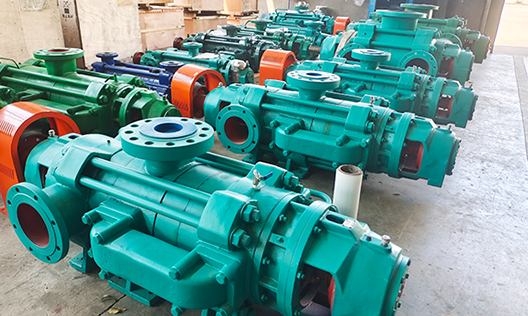
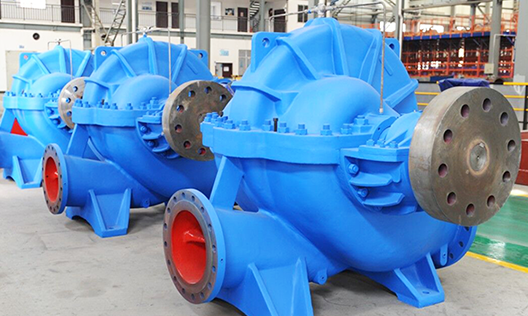
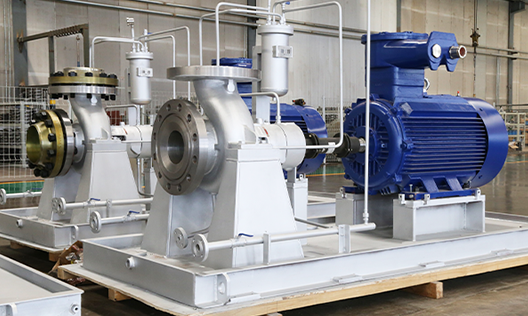
Puede fabricar 26 series de productos, incluyendo bombas de circulación para grandes centrales eléctricas, bombas de condensación para grandes centrales eléctricas, bombas petroquímicas, bombas multietapa, bombas de aguas residuales y lodo, bombas multietapa autoequilibradas, bombas de doble succión y única etapa tipo split, y bombas centrífugas de succión simple y única etapa.
-
Cases
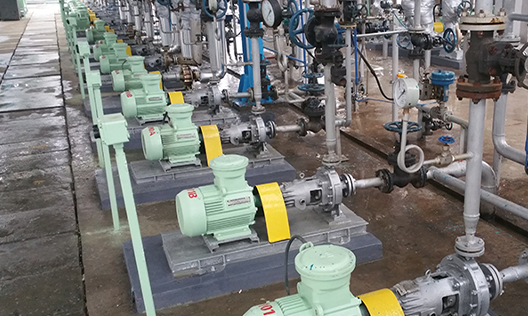
La elección de más de cientos de miles de clientes, cubriendo industrias como minería de carbón, metalurgia, química, energía, recursos hídricos, alimentos, municipalidades y protección ambiental, y exportando a Asia Sudeste, África, América y otros lugares.
-
Service
La empresa fue la primera en la industria en obtener las certificaciones internacionales del sistema de calidad ISO 9001:2008, del sistema de gestión ambiental ISO 14001 y del sistema de gestión de seguridad y salud ocupacional GB/T 28001, además de la certificación API 610 de la Asociación Estadounidense del Petróleo.
-
About us
La empresa, fundada en 1989, es una empresa nacional de alta tecnología integral que integra diseño, investigación y desarrollo, fabricación y servicios; actualmente es una empresa clave en la industria china de bombas centrífugas y una de las grandes fábricas especializadas.
-

Blogs
Con productos innovadores, calidad excepcional y servicios integrales, buscamos la verdad y la pragmática, avanzamos con iniciativa, y nos esforzamos por lograr el objetivo de ser "la marca líder en el campo de aplicación de bombas centrífugas en el país"! Raigada en Hunan, orientada a todo el país y hacia el mundo!
The Role of Couplings in Centrifugal Pump Systems
Publication Date:
2025-11-01
Author:
Source:


When many maintenance technicians perform upkeep on centrifugal pumps, they always make a point to check the tightness of the coupling bolts—this component, which looks like a "connecting disc," actually is Centrifugal pump And Electric motor The "critical link" between components—neglecting its role can easily lead to abnormal pump noises, shaft sleeve wear, and even shorten the lifespan of the entire machine. Many users know they need to replace seals regularly, but few understand the specific function of the coupling. In fact, its role goes far beyond simply "connecting shafts." In this article, the centrifugal pump manufacturer Changsha Zhonglian Pump Industry We will provide a detailed introduction to the function of centrifugal pump coupling units, giving you a deeper understanding of this crucial component.

1. First of all Transmitting torque This is the most fundamental function of a coupling. A centrifugal pump relies on an electric motor to drive the impeller and draw water, but the pump shaft and motor shaft cannot be directly connected in a rigid manner. Instead, the coupling ensures that the torque generated by the motor is steadily transferred to the pump shaft, preventing any loss of power. For instance, in a 5.5 kW centrifugal pump, the motor’s torque must be precisely transmitted to the pump shaft via the coupling. If the coupling wears out or slips, you may experience situations like "the motor spins, but the pump doesn’t," or a sudden drop in pumping efficiency.

2. Secondly, it can Compensate for installation deviations In actual installation, it is often difficult to achieve perfect coaxial alignment between the centrifugal pump and the motor (i.e., "coaxiality deviation"), as slight radial, axial, or angular misalignments may occur. Couplings—especially flexible couplings—can compensate for these deviations through their inherent elastic elements, such as rubber pads or nylon pins, preventing excessive stress on the pump shaft and motor shaft caused by forced alignment. This, in turn, helps reduce wear on bearings and shaft sleeves. For instance, when installing a centrifugal pump underground, even minor ground settlement can lead to coaxiality shifts; in such cases, the coupling effectively acts as a "buffering and adjusting mechanism."
3. There's also Shock-absorbing and vibration-damping The function of the coupling is to absorb the brief torque surges that occur during the instant a centrifugal pump starts up or when the load fluctuates, thereby reducing vibrations transmitted to both the pump body and the motor. For instance, when starting a centrifugal pump with a large flow rate, without the buffering effect of a coupling, the resulting torque surge could cause the impeller to loosen. However, the coupling acts like a "spring," effectively dissipating part of the impact force and safeguarding the pump's critical components.
4. Finally comes Security Protection Some couplings—such as safety couplings—are equipped with overload protection features: When foreign objects become lodged in the impeller inside a centrifugal pump, causing torque to exceed the rated value, the coupling will disconnect the power transmission via mechanisms like shear pins or slip, thereby preventing the motor from overheating and burning out, or the pump shaft from breaking. For instance, when pumping wastewater containing impurities, if a stone gets stuck in the impeller, the coupling can promptly "disconnect," minimizing the risk of the problem escalating into a more serious failure.
When selecting a coupling, be sure to match it with the centrifugal pump's rated torque, speed, and installation environment (e.g., choose a wear-resistant type for mining applications or a corrosion-resistant type for chemical industries). If you're unsure about the model, feel free to contact the technical team at Zhonglian Pump Industry—we’ll recommend a suitable coupling based on your equipment parameters, helping your centrifugal pump operate smoothly and reliably.
Recommended Information


Related Products
Perhaps you also want to know?
Zoomlian Pump Industry
Address:No. 210, Environmental Protection Middle Road, Yuhua Economic Development Zone, Changsha City, Hunan Province China
All rights reserved © Changsha Zoomlian Pump Co., Ltd.
This website supports IPv4 IPv6 bidirectional access
Website construction:Zhongqi Power Changsha