

-
Products
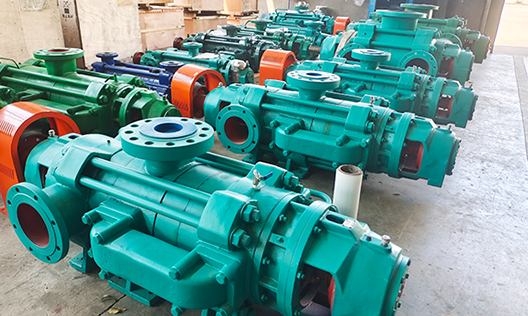
Puede fabricar 26 series de productos, incluyendo bombas de circulación para grandes centrales eléctricas, bombas de condensación para grandes centrales eléctricas, bombas petroquímicas, bombas multietapa, bombas de aguas residuales y lodo, bombas multietapa autoequilibradas, bombas de doble succión y única etapa tipo split, y bombas centrífugas de succión simple y única etapa.
-
Cases
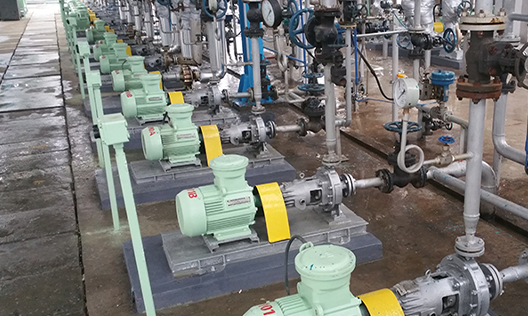
La elección de más de cientos de miles de clientes, cubriendo industrias como minería de carbón, metalurgia, química, energía, recursos hídricos, alimentos, municipalidades y protección ambiental, y exportando a Asia Sudeste, África, América y otros lugares.
-
Service
La empresa fue la primera en la industria en obtener las certificaciones internacionales del sistema de calidad ISO 9001:2008, del sistema de gestión ambiental ISO 14001 y del sistema de gestión de seguridad y salud ocupacional GB/T 28001, además de la certificación API 610 de la Asociación Estadounidense del Petróleo.
-
About us
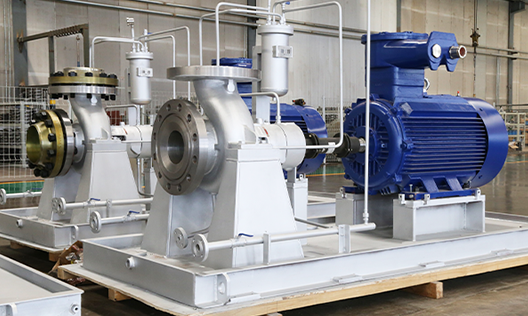
La empresa, fundada en 1989, es una empresa nacional de alta tecnología integral que integra diseño, investigación y desarrollo, fabricación y servicios; actualmente es una empresa clave en la industria china de bombas centrífugas y una de las grandes fábricas especializadas.
-

Blogs
Con productos innovadores, calidad excepcional y servicios integrales, buscamos la verdad y la pragmática, avanzamos con iniciativa, y nos esforzamos por lograr el objetivo de ser "la marca líder en el campo de aplicación de bombas centrífugas en el país"! Raigada en Hunan, orientada a todo el país y hacia el mundo!
Seawater pump
Publication Date:
2025-09-05
Author:
Source:


A seawater pump is a mechanical device capable of extracting and transporting water from oceans or saline sources. Since seawater pumps operate in marine environments, numerous factors must be carefully considered during their selection and design—such as particulate matter and salinity levels in the water, as well as operational conditions and environmental requirements. This article will briefly introduce common types of seawater pumps and provide guidance on how to choose the right one, aiming to offer readers some valuable insights and references.
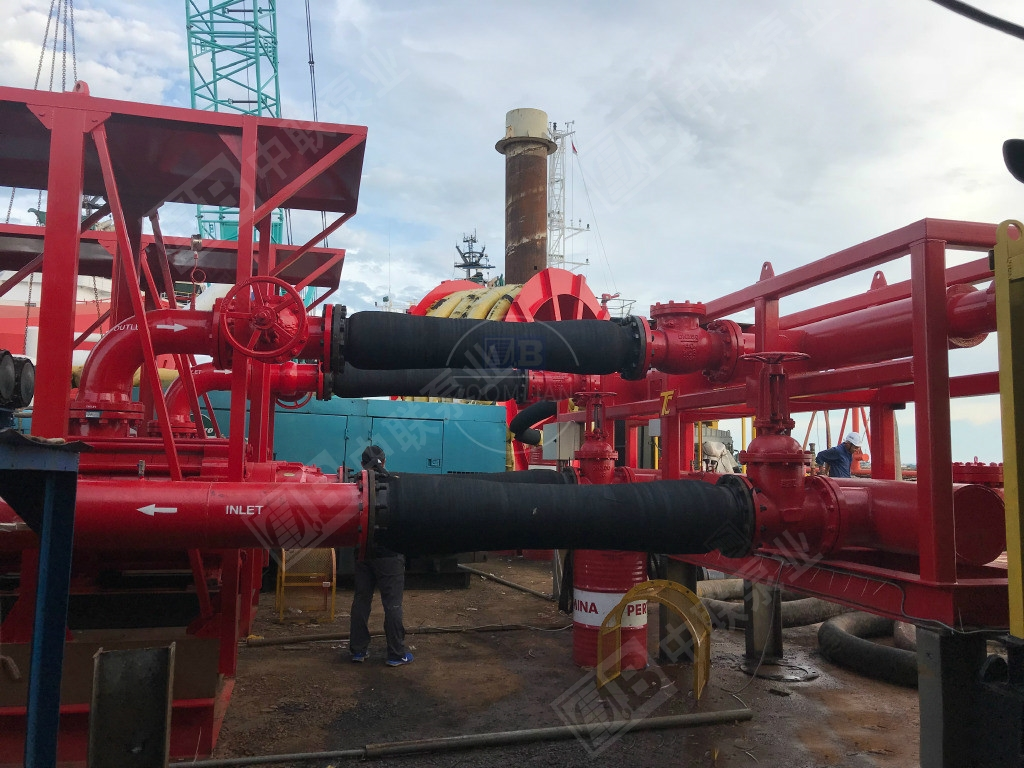
1. Common Types of Seawater Pumps Seawater pumps are essential mechanical equipment in marine engineering. Depending on factors such as their application, structure, and power source, they can be categorized into different types. By purpose, they include offshore lifting pumps, seawater circulation pumps, seawater discharge pumps, seawater desalination pumps, seawater brine pumps, and seawater booster pumps, among others. By structure, they can be classified as Centrifugal pump , submersible pumps, self-priming pumps, and deep-well pumps, among others; according to their power source, they can be categorized into diesel-engine driven, electric-motor driven, hydraulic-driven types, and more.
2. Selection Methods for Seawater Pumps
1. Rotational Speed and Flow Rate: The selection of a seawater pump should be determined based on the required flow rate and head, as flow rate and rotational speed are closely related. For applications requiring high flow rates, pumps with lower speeds and larger diameters are typically chosen; whereas for scenarios demanding higher heads, pumps with higher speeds and smaller diameters are generally preferred. Additionally, it’s essential to ensure that the pump’s rated flow rate matches the actual calculated flow rate.
2. Materials and Corrosion Resistance Since seawater contains high levels of salt as well as hard particulate matter, it is crucial to select materials that can withstand these unique corrosive and abrasive conditions. The market offers a wide variety of pump materials, with commonly used options including stainless steel and corrosion-resistant chromium alloys.
3. Operating Environment and Requirements When selecting a seawater pump, it’s also necessary to consider the actual working environment and requirements. The operating environment directly affects the pump’s efficiency; therefore, pumps designed for marine applications must feature characteristics such as corrosion resistance, wear resistance, shockproof and waterproof capabilities, protection against sun and rain, and low noise levels.
4. Operating Costs When selecting a seawater pump, it’s also important to consider its operating costs, including procurement expenses, maintenance fees, energy costs, and more. While the initial purchase may involve slightly higher costs, in the long run, these pumps could offer better value in terms of energy savings and reduced maintenance expenses compared to non-preferred models. Seawater pumps can be categorized into various models based on their intended use and specific features. Here are some commonly used seawater pump models:
1. Multistage centrifugal pump : Suitable for applications requiring water extraction from deep-water sources, it can also be used in oilfield water injection systems and is widely employed as a seawater desalination pump. Its design is slightly more complex than that of single-stage centrifugal pumps, offering a broad head range, making it ideal for seawater lifting scenarios involving high pressure and significant lift heights. Commonly used models include the DF-type corrosion-resistant multistage pump and the DFP-type self-balancing multistage pump.
1.1 DF-Type Corrosion-Resistant Multistage Pump This is our company’s flagship product—a highly mature, technologically advanced solution. Currently, mainstream multi-stage DF pumps on the market rely on balance discs to counteract axial forces. While this balancing system is cost-effective initially, it suffers from frequent replacement needs and a high failure rate over time. Moreover, the efficiency losses caused by wear in the balancing system lead to significant hidden costs. In contrast, our company’s newly developed balance drum system offers automatic balancing capabilities, delivering performance comparable to self-balancing multi-stage pumps. Not only does it significantly reduce wear and boost efficiency compared to traditional balance-disc-based designs, but it also dramatically extends the pump’s service life. As a result, it translates into tangible savings on long-term operation and maintenance costs—while still remaining more affordable than self-balancing multi-stage pumps. Plus, it’s easier to maintain and repair, making it an exceptionally cost-effective and reliable choice for high-pressure seawater pumping applications.

↑Click the image to learn more about Zhonglian Pump Industry's [DF Series Corrosion-Resistant Multistage Pump]—view product details and parameter information here↑
1.2 DFP-Type Corrosion-Resistant Self-balanced multistage pump This is a new-generation, high-efficiency, energy-saving, multi-stage centrifugal pump featuring a novel structure and advanced technology, backed by independently owned intellectual property patents. Crafted from wear- and corrosion-resistant stainless steel through precision casting, the pump boasts exceptional durability against corrosive environments. Its hydraulic design incorporates high-pressure resistance and superior performance, specifically addressing the critical issue of excessive energy consumption in seawater circulation pumps. The DFP-type pump introduces innovative changes to the conventional multi-stage centrifugal pump design by eliminating the traditional axial force balancing mechanism. As a result, its operational efficiency surpasses that of standard multi-stage pumps by more than three times, significantly boosting users' economic benefits while dramatically reducing production costs. Notably, the impellers in the DFP pump are symmetrically arranged in both forward and reverse directions, ensuring that the axial thrust generated by each impeller pair cancels out during operation, thereby preventing any axial movement or displacement. By doing away with the conventional balancing system altogether, this self-balancing multi-stage pump effectively resolves common issues like wear on balance discs and rings, as well as rotor seizure—problems often caused by the failure of traditional balancing mechanisms. Moreover, the impellers and diffusers in the DFP pump remain perfectly centered at all times, executing only circular motion without any risk of friction or collision between components. This unique design not only extends the pump's service life but also ensures safe operation for over three times longer than pumps equipped with the traditional balance-disc configuration. Additionally, the reduced number of vulnerable parts—such as sealing rings at dynamic-to-static interfaces, diffuser sleeves, shaft liners, and throttling sleeves—translates into fewer maintenance requirements and substantially lower repair expenses, further enhancing the pump's long-term reliability and cost-effectiveness.

↑Click the image to learn more about Zhonglian Pump Industry's [DFP Series Corrosion-Resistant Self-Balancing Multistage Pump]—view product details and parameter information!↑
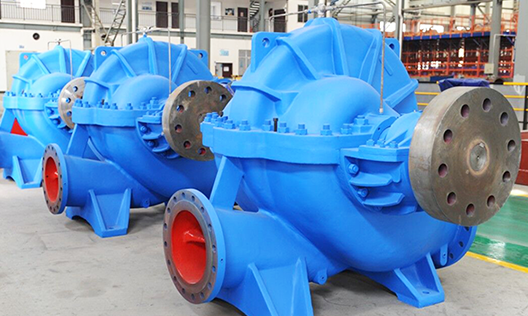
2. Mid-opening type Double-suction centrifugal pump : Primarily used for seawater circulation pumps and seawater transfer pumps in electrolysis systems, it can also be applied to lower groundwater levels. Featuring a simple structure, convenient installation, long service life, and an easily accessible mid-open design for maintenance, this type of seawater pump is widely adopted in marine engineering projects. It incorporates the hydromechanical model recommended by national standards for high-efficiency, energy-saving products, offering advantages such as high efficiency, a broad performance range, safe and stable operation, low noise, extended lifespan, and ease of installation and maintenance.

↑Click the image to learn more about Zhonglian Pump Industry's [SF Series Corrosion-Resistant Double-Suction Centrifugal Pump]—view product details and parameter information here!↑
3, Vertical Long-Axis Pump : These are common seawater intake pumps, primarily used in marine settings such as seaside bathing areas, resorts, diving bases, and water sports centers. They serve to draw seawater into various facilities or industrial plants. While they still belong to the centrifugal pump category, their main advantage lies in the fact that, thanks to the submersible design of the discharge pipe, there’s no need to prime the pump with water or evacuate air before starting—making them far more convenient to operate. Additionally, the presence of the discharge pipe and protective casing significantly reduces the risk of damage to critical components like the impeller and guide bearings inside the pump, thereby lowering maintenance costs and dramatically extending the pump's service life. The drive unit for the long-shaft deep well pump—whether an electric motor or a diesel engine—is mounted directly onto the pump base, while only the pump body itself is submerged in seawater. The drive unit remains above water, connected to the pump via a long transmission shaft, typically composed of three sections: an upper shaft, a middle shaft, and the pump shaft itself. Each shaft segment is joined by a coupling to ensure seamless operation. To prevent the slender transmission shaft from bending or deforming under load, several positioning bearings are installed inside the discharge pipe. Finally, the pump’s outlet is located at the top of the pump body, allowing the entire system to be easily secured to an offshore platform. Meanwhile, the submerged pump unit can simply be attached to the discharge pipe, making installation and removal processes straightforward and efficient—all tasks that can be completed right on the offshore platform.

↑Click the image to learn more about the Zhonglian Pump Industry [LCF-Type Long-Shaft Seawater Pump]—view product details and parameter information here↑
Ocean engineering encompasses numerous industries and fields related to seawater, and a wide variety of seawater pump types are employed accordingly. The examples mentioned above represent just some of the commonly used models, while other more specialized options—such as sliding-type seawater pumps and screw-type seawater pumps—are also available. Ultimately, the selection of a seawater pump should be tailored to the specific application and requirements, taking into account factors like the project environment, desired flow rate, head capacity, and operational costs. By carefully evaluating these elements, you can choose the most suitable seawater pumping equipment, ensuring optimal performance and maximizing benefits.
If you have procurement needs for seawater pumps, feel free to consult our online customer service or call our company hotline at 0731-88192288 for more information. Our company offers free pump selection and quotation services. With extensive experience in seawater pump projects and a highly skilled technical team, we are committed to providing you with the best solutions and outstanding after-sales support.
Next:
Recommended Information


Related Products
Perhaps you also want to know?
Zoomlian Pump Industry
Address:No. 210, Environmental Protection Middle Road, Yuhua Economic Development Zone, Changsha City, Hunan Province China
All rights reserved © Changsha Zoomlian Pump Co., Ltd.
This website supports IPv4 IPv6 bidirectional access
Website construction:Zhongqi Power Changsha