

-
Products
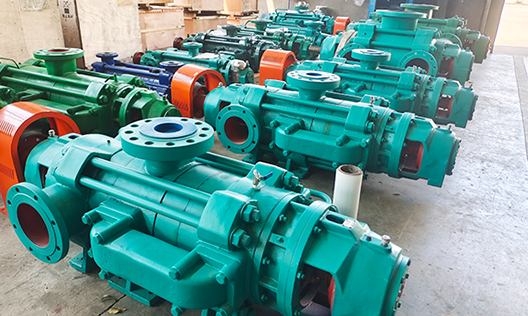
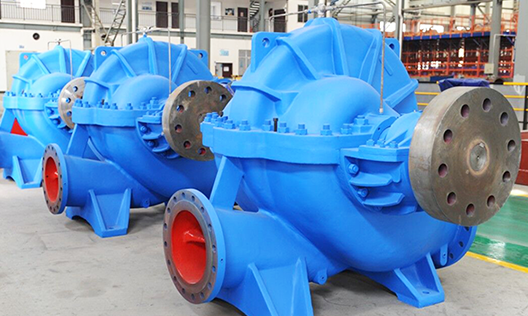
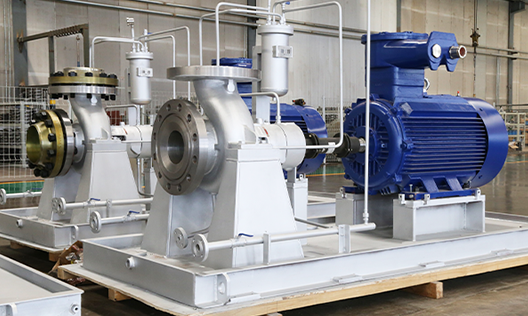
Puede fabricar 26 series de productos, incluyendo bombas de circulación para grandes centrales eléctricas, bombas de condensación para grandes centrales eléctricas, bombas petroquímicas, bombas multietapa, bombas de aguas residuales y lodo, bombas multietapa autoequilibradas, bombas de doble succión y única etapa tipo split, y bombas centrífugas de succión simple y única etapa.
-
Cases
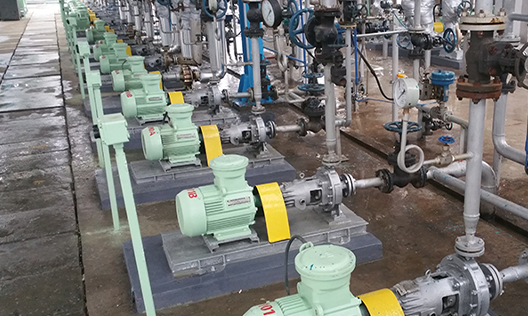
La elección de más de cientos de miles de clientes, cubriendo industrias como minería de carbón, metalurgia, química, energía, recursos hídricos, alimentos, municipalidades y protección ambiental, y exportando a Asia Sudeste, África, América y otros lugares.
-
Service
La empresa fue la primera en la industria en obtener las certificaciones internacionales del sistema de calidad ISO 9001:2008, del sistema de gestión ambiental ISO 14001 y del sistema de gestión de seguridad y salud ocupacional GB/T 28001, además de la certificación API 610 de la Asociación Estadounidense del Petróleo.
-
About us
La empresa, fundada en 1989, es una empresa nacional de alta tecnología integral que integra diseño, investigación y desarrollo, fabricación y servicios; actualmente es una empresa clave en la industria china de bombas centrífugas y una de las grandes fábricas especializadas.
-

Blogs
Con productos innovadores, calidad excepcional y servicios integrales, buscamos la verdad y la pragmática, avanzamos con iniciativa, y nos esforzamos por lograr el objetivo de ser "la marca líder en el campo de aplicación de bombas centrífugas en el país"! Raigada en Hunan, orientada a todo el país y hacia el mundo!
Is there any difference between chemical industrial centrifugal pumps and ordinary multistage pumps when choosing the sealing method?
Publication Date:
2025-06-19
Author:
Source:


Our manufacturer's after-sales service personnel have received many cases where customers ignored the importance of the medium during selection, resulting in many problems with centrifugal pumps during use.
There are also many after-sales cases caused by incorrect sealing method selection for chemical pumps. So how should the sealing method for chemical centrifugal pumps be chosen?
First, let's understand the three main types of sealing methods:
1. Classification of sealing methods and applicable scenarios
(1) Mechanical seal (mainstream choice)
Requirements:
Corrosion resistance: The sealing face material must be compatible with the medium (e.g., silicon carbide, alumina ceramics for strong acids; hard alloys for media containing particles).
Temperature and pressure resistance: For high-temperature conditions (>150℃), metal bellows seals are required; for high pressure, the sealing ring pressure-bearing design must be reinforced.
Double-end face seal:
Used for hazardous media (such as chlorine gas, hydrofluoric acid), requires a barrier fluid system (Plan 53/54).
The barrier fluid pressure must be higher than the pump chamber pressure (usually 0.1~0.2MPa higher).
Flushing schemes:
Plan 11: Self-flushing, suitable for clean media.
Plan 32: External flushing (injecting clean buffer liquid), used for media prone to crystallization or containing particles.
(2) Packing seal (limited to specific conditions)
Requirements:
Material: Use corrosion-resistant packing (such as PTFE, graphite fiber) to avoid failure caused by medium corrosion.
Cooling and lubrication: External flushing water or lubricant (such as Plan 13) is required to prevent dry friction and overheating.
Application limitations: Only for non-toxic, non-hazardous media (such as clean water, low-temperature weak alkaline solutions), and allows slight leakage (about 5~10 drops/minute).
(3) Magnetic seal (leak-free solution)
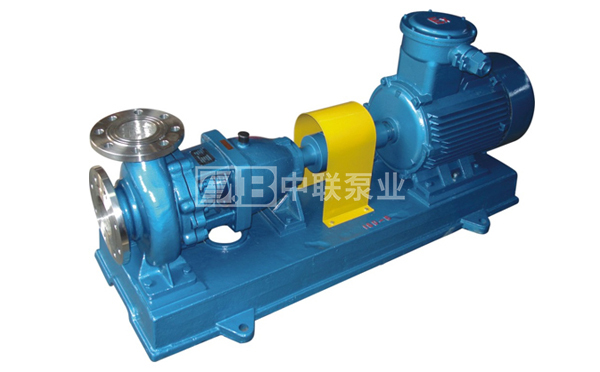
[For more information on chemical pump models, parameters, selection, and quotation plans, you can click the image above to learn more]
Requirements:
Isolation sleeve material: Must be resistant to medium corrosion (such as Hastelloy, ceramics) and avoid eddy current heating.
Power limitation: High-power pumps (>100kW) should be chosen cautiously to prevent demagnetization.
Applicable scenarios: Highly toxic (such as liquid chlorine), strongly carcinogenic (such as aniline), or high-purity media.
3. Sealing solutions for special conditions
(1) Easily vaporized media (such as liquid hydrocarbons)
Requirements:
Use double-end face seal + pressurized barrier fluid (Plan 53B) to prevent dry friction caused by medium vaporization.
The sealing chamber is equipped with a throttling sleeve to maintain stable pressure.
(2) High viscosity media (such as polymer melts)
Requirements:
Enlarge the sealing chamber space to avoid medium solidification and blockage.
Use heating jackets (steam or electric heating) to maintain fluidity.
(3) Media containing crystals/easily precipitating media
Requirements:
Continuous external flushing (Plan 32) or ultrasonic anti-scaling design.
Avoid using flat sealing faces; instead, use conical or spiral grooves to enhance self-cleaning ability.
Chemical pumps themselves are a special industry among pump products because the media transported are mostly harmful to humans. Therefore, the selection and sealing of chemical pumps relate to equipment reliability, safety, and service life. Especially when transporting flammable, explosive, or strongly corrosive media, sealing problems can lead to safety accidents, so extra attention is needed when choosing seals.
Latest News
Related Products
Perhaps you also want to know?
Zoomlian Pump Industry
Address:No. 210, Environmental Protection Middle Road, Yuhua Economic Development Zone, Changsha City, Hunan Province China
All rights reserved © Changsha Zoomlian Pump Co., Ltd.
This website supports IPv4 IPv6 bidirectional access
Website construction:Zhongqi Power Changsha