

-
Products
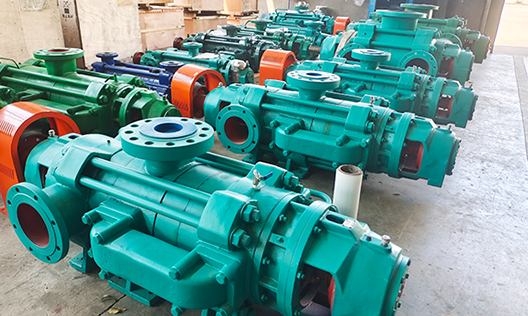
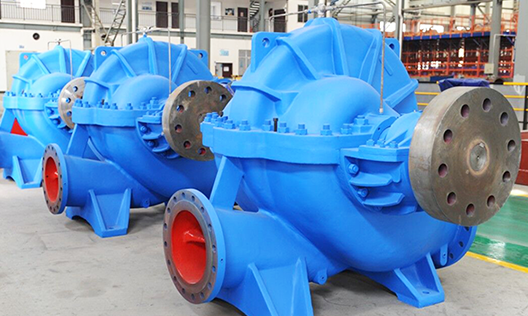
Puede fabricar 26 series de productos, incluyendo bombas de circulación para grandes centrales eléctricas, bombas de condensación para grandes centrales eléctricas, bombas petroquímicas, bombas multietapa, bombas de aguas residuales y lodo, bombas multietapa autoequilibradas, bombas de doble succión y única etapa tipo split, y bombas centrífugas de succión simple y única etapa.
-
Cases
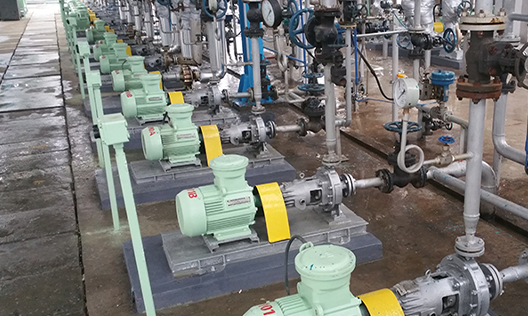
La elección de más de cientos de miles de clientes, cubriendo industrias como minería de carbón, metalurgia, química, energía, recursos hídricos, alimentos, municipalidades y protección ambiental, y exportando a Asia Sudeste, África, América y otros lugares.
-
Service
La empresa fue la primera en la industria en obtener las certificaciones internacionales del sistema de calidad ISO 9001:2008, del sistema de gestión ambiental ISO 14001 y del sistema de gestión de seguridad y salud ocupacional GB/T 28001, además de la certificación API 610 de la Asociación Estadounidense del Petróleo.
-
About us
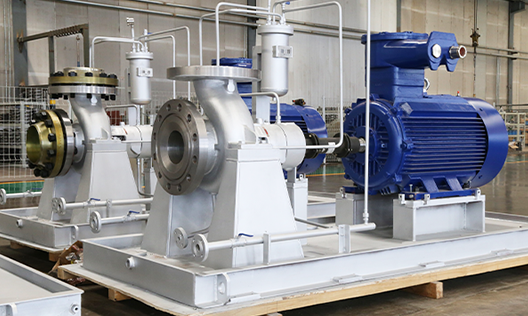
La empresa, fundada en 1989, es una empresa nacional de alta tecnología integral que integra diseño, investigación y desarrollo, fabricación y servicios; actualmente es una empresa clave en la industria china de bombas centrífugas y una de las grandes fábricas especializadas.
-

Blogs
Con productos innovadores, calidad excepcional y servicios integrales, buscamos la verdad y la pragmática, avanzamos con iniciativa, y nos esforzamos por lograr el objetivo de ser "la marca líder en el campo de aplicación de bombas centrífugas en el país"! Raigada en Hunan, orientada a todo el país y hacia el mundo!
How to choose the appropriate model for a horizontal multistage chemical pump?
Publication Date:
2025-06-19
Author:
Source:


The horizontal multistage pump has a very wide range of applications and is used in many places. It is also widely used in the chemical pump industry. Due to the particularity of the chemical pump industry, there are more requirements for the selection of delivery pumps. Since chemical pumps usually transport corrosive, toxic, or high-temperature media, special attention must be paid to material selection during the selection process.
Of course, besides paying extra attention to materials when selecting chemical pumps, other selection conditions follow the same steps as multistage pump selection. In general, the selection steps for all water pumps are roughly the same, except that some special pump types have a few points to note, such as chemical pumps.
Special attention is needed when selecting chemical pumps:
Clarify the characteristics of the medium
Medium composition: Determine the chemical properties of the transported medium (such as corrosiveness, toxicity, volatility), which directly affects the material selection of the pump body and flow-through parts.
Strongly corrosive media (such as sulfuric acid, hydrochloric acid): corrosion-resistant alloys (such as Hastelloy, titanium, duplex stainless steel) must be selected.
Media containing solid particles: wear-resistant materials (such as high-chromium cast iron) must be chosen, and the impeller structure (semi-open or open) should be considered.
Medium temperature: for high-temperature media (>80℃), consider the material's thermal expansion coefficient and sealing cooling systems (such as mechanical seals with cooling water jackets).
Medium density and viscosity: for high-viscosity media (such as heavy oil), adjust the pump's power and speed to avoid efficiency loss.
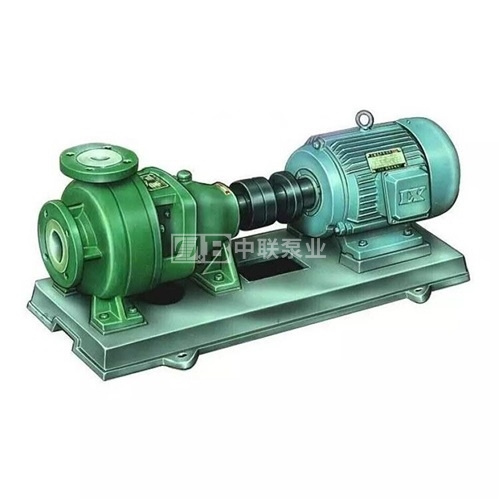
[For more information on chemical pump models, parameters, selection, and quotation plans, please click the image above]
This will affect the choice of material for the flow-through parts when selecting the product later;
Flow-through parts (impeller, pump body, guide vane):
Conventional corrosive media: 304/316L stainless steel.
Strong acid/strong alkali: use polytetrafluoroethylene (PTFE) lining, ceramics, or special alloys (such as Monel, Inconel).
Sealing system:
Mechanical seal: preferably choose double mechanical seals (with flushing liquid), suitable for toxic or volatile media.
Packing seal: only used for non-corrosive, non-hazardous media and requires regular maintenance.
Other parameters are the same as multistage pump selection:
Flow (Q): determined according to the maximum/minimum flow required by the process, with a 10%~20% margin reserved.
Head (H): calculated based on the total resistance of the pipeline system (including vertical height, pipe friction, valve losses, etc.). Multistage pumps achieve high head by increasing the number of impeller stages.
Required net positive suction head (NPSHr): ensure that the available net positive suction head (NPSHa) > NPSHr + safety margin (0.5~1m) to avoid cavitation damage to the pump body.
Also consider the pump product structure, choosing horizontal or vertical based on installation conditions; select chemical pump model and material based on medium temperature; choose explosion-proof grade according to the usage environment, etc.
In summary, the selection of multistage chemical pumps needs to comprehensively consider medium characteristics, working conditions, material compatibility, performance parameters, and other factors. Frequent communication with manufacturers will definitely help select the appropriate model.
Latest News
Related Products
Perhaps you also want to know?
Zoomlian Pump Industry
Address:No. 210, Environmental Protection Middle Road, Yuhua Economic Development Zone, Changsha City, Hunan Province China
All rights reserved © Changsha Zoomlian Pump Co., Ltd.
This website supports IPv4 IPv6 bidirectional access
Website construction:Zhongqi Power Changsha