

-
Products
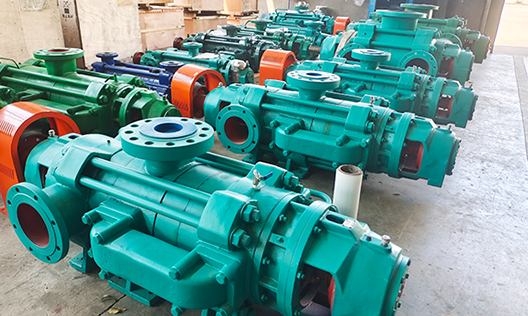
Puede fabricar 26 series de productos, incluyendo bombas de circulación para grandes centrales eléctricas, bombas de condensación para grandes centrales eléctricas, bombas petroquímicas, bombas multietapa, bombas de aguas residuales y lodo, bombas multietapa autoequilibradas, bombas de doble succión y única etapa tipo split, y bombas centrífugas de succión simple y única etapa.
-
Cases
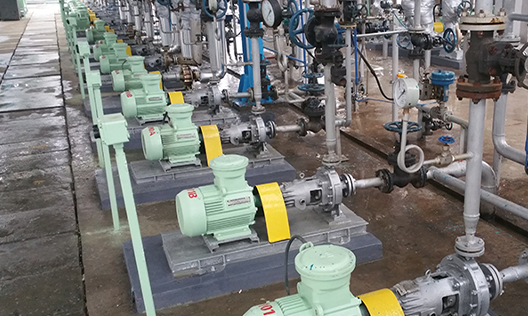
La elección de más de cientos de miles de clientes, cubriendo industrias como minería de carbón, metalurgia, química, energía, recursos hídricos, alimentos, municipalidades y protección ambiental, y exportando a Asia Sudeste, África, América y otros lugares.
-
Service
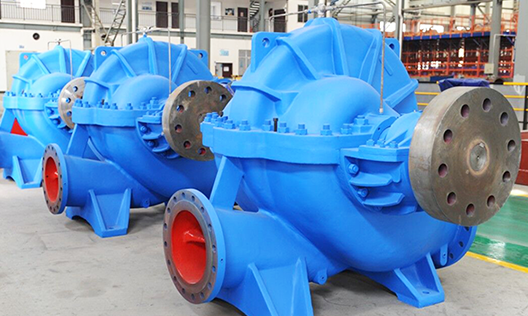
La empresa fue la primera en la industria en obtener las certificaciones internacionales del sistema de calidad ISO 9001:2008, del sistema de gestión ambiental ISO 14001 y del sistema de gestión de seguridad y salud ocupacional GB/T 28001, además de la certificación API 610 de la Asociación Estadounidense del Petróleo.
-
About us
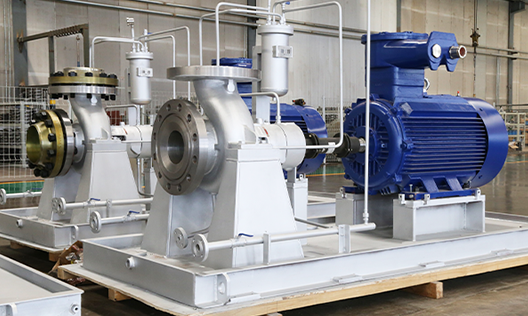
La empresa, fundada en 1989, es una empresa nacional de alta tecnología integral que integra diseño, investigación y desarrollo, fabricación y servicios; actualmente es una empresa clave en la industria china de bombas centrífugas y una de las grandes fábricas especializadas.
-

Blogs
Con productos innovadores, calidad excepcional y servicios integrales, buscamos la verdad y la pragmática, avanzamos con iniciativa, y nos esforzamos por lograr el objetivo de ser "la marca líder en el campo de aplicación de bombas centrífugas en el país"! Raigada en Hunan, orientada a todo el país y hacia el mundo!
Diagnosis of Negative Pressure Issues and System Solutions for D-Type Horizontal Multistage Centrifugal Pumps
Publication Date:
2026-03-25
Author:
Source:


Type D Horizontal Multistage Centrifugal Pump Negative pressure during operation typically refers to the pump inlet pressure being lower than the ambient atmospheric pressure, which can lead to cavitation, flow fluctuations, and other issues. The following are Centrifugal pump Manufacturer Changsha Zoomlion Pump Industry This document provides a technical analysis of the causes of negative-pressure issues in D-type horizontal multistage centrifugal pumps, along with system-level solutions, for reference by user organizations.

I. Diagnosis of the Causes of Negative Pressure
1. Cavitation risk: When the inlet flow velocity of the impeller is excessively high or the installation elevation exceeds the allowable limit, localized low-pressure zones are likely to form, causing the liquid to vaporize and generate bubbles. Upon collapse, these bubbles create impact loads on the impeller, resulting in negative pressure.
2. Abnormal system resistance: Clogged filters, valves that are not fully open, and pipeline leaks can cause a sudden increase in inlet resistance, leading to pressure imbalance.
3. Speed Fluctuation: Faults in the motor or the drive system cause the rotational speed to deviate from the design value, resulting in a mismatch between the pump performance curve and the piping network.
II. Tiered Handling Plan
(1) Basic Troubleshooting (Mandatory for Technical Personnel)
1. Sealing Integrity Inspection: Use a helium mass spectrometer leak detector to inspect shaft seals and flange connection surfaces, with particular attention to wear on the rotating ring of mechanical seals and aging of O-rings. Any detected leaks must be immediately addressed by replacing the seal components with the correct model (original factory parts from Changsha Zoomlion Pump Industry are recommended).
2. Inlet System Optimization: If the inlet valve opening is less than 30%, gradually increase it to the operating range of 50%–70%, and record the flow–pressure curve to verify pressure differential balance. Inspect the inlet strainer mesh size (it is recommended to use an 80-mesh strainer as standard equipment for D-type pumps); if clogging occurs, clean the strainer with a citric acid solution; in severe cases, replace the strainer with one of the same specifications. (2) Installation Parameter Calibration
1. Net Positive Suction Head (NPSH) Verification: The measured NPSH value must meet the requirements specified in the equipment manual (Changsha Zoomlion Pump Industry standard NPSHr = 3.2 m). If the suction lift H exceeds the allowable value, the following measures shall be implemented: reduce the pump foundation elevation by no more than 50 mm per adjustment, and simultaneously adjust the pipeline slope to 0.005; install an additional pressure-stabilizing tank with a volume of at least 10% of the pump flow rate, or install a vacuum-break valve on the suction line.
2. Handling gas blockages in pipelines: Employ a segmented pressure-testing method to locate leaks, with particular attention paid to the bend radius (for D-type pumps, an R = 1.5D radius is recommended). An automatic air vent valve must be installed at each gas-blockage point.
(3) Dynamic Parameter Adjustment
1. Speed calibration: Use a laser tachometer to measure the motor’s actual speed, and fine-tune it via the variable-frequency drive to within ±0.5% of the rated speed, thereby preventing the occurrence of a “creep zone” during VFD operation.
2. Backpressure Control: Install a backpressure valve upstream of the discharge pipeline and set its pressure setting 0.05–0.1 MPa higher than the pump’s discharge working pressure to establish a stable pressure gradient.
III. Emergency and Preventive Measures
1. Temporary Response: If negative pressure causes pump vibration to exceed 4.5 mm/s, immediately switch to the standby pump; after the faulty pump is repaired, perform a vibration spectrum analysis to identify any impeller cavitation damage.
2. Preventive maintenance: Conduct quarterly inspections of the inlet vacuum level (normal range ≤ -0.02 MPa), record NPSH parameters monthly, and establish equipment health records.
IV. Professional Support Channel
Changsha Zoomlion Pump Industry provides 24-hour technical response services. Using the “Pump IoT” system, it remotely diagnoses the root causes of negative pressure and, when necessary, dispatches engineers equipped with vibration analyzers, pressure sensors, and other instruments to perform on-site calibration, ensuring that D-type pumps maintain an operating efficiency of over 90% under design conditions.
Recommended Information


Related Products
Perhaps you also want to know?
Zoomlian Pump Industry
Address:No. 210, Environmental Protection Middle Road, Yuhua Economic Development Zone, Changsha City, Hunan Province China
All rights reserved © Changsha Zoomlian Pump Co., Ltd.
This website supports IPv4 IPv6 bidirectional access
Website construction:Zhongqi Power Changsha