

-
Products
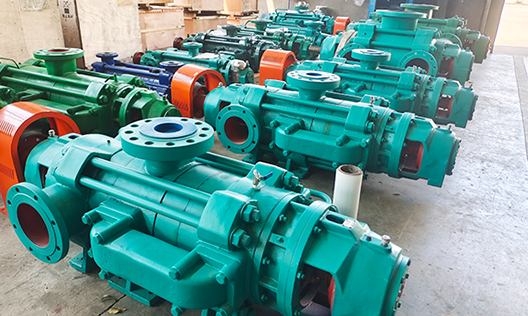
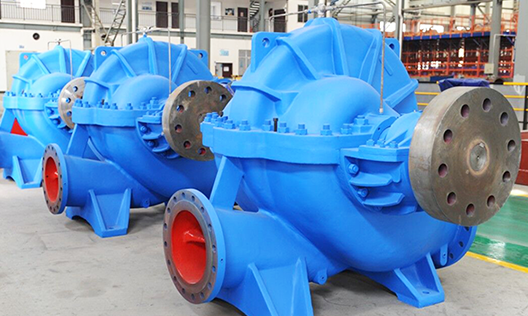
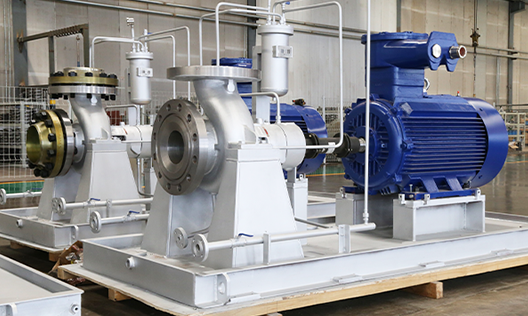
Puede fabricar 26 series de productos, incluyendo bombas de circulación para grandes centrales eléctricas, bombas de condensación para grandes centrales eléctricas, bombas petroquímicas, bombas multietapa, bombas de aguas residuales y lodo, bombas multietapa autoequilibradas, bombas de doble succión y única etapa tipo split, y bombas centrífugas de succión simple y única etapa.
-
Cases
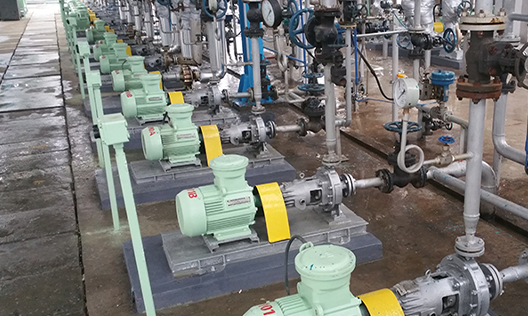
La elección de más de cientos de miles de clientes, cubriendo industrias como minería de carbón, metalurgia, química, energía, recursos hídricos, alimentos, municipalidades y protección ambiental, y exportando a Asia Sudeste, África, América y otros lugares.
-
Service
La empresa fue la primera en la industria en obtener las certificaciones internacionales del sistema de calidad ISO 9001:2008, del sistema de gestión ambiental ISO 14001 y del sistema de gestión de seguridad y salud ocupacional GB/T 28001, además de la certificación API 610 de la Asociación Estadounidense del Petróleo.
-
About us
La empresa, fundada en 1989, es una empresa nacional de alta tecnología integral que integra diseño, investigación y desarrollo, fabricación y servicios; actualmente es una empresa clave en la industria china de bombas centrífugas y una de las grandes fábricas especializadas.
-

Blogs
Con productos innovadores, calidad excepcional y servicios integrales, buscamos la verdad y la pragmática, avanzamos con iniciativa, y nos esforzamos por lograr el objetivo de ser "la marca líder en el campo de aplicación de bombas centrífugas en el país"! Raigada en Hunan, orientada a todo el país y hacia el mundo!
Troubleshooting and Solutions for Difficult Startup of High-Efficiency, Energy-Saving Multistage Pumps
Publication Date:
2026-03-26
Author:
Source:


Multistage centrifugal pumps play a critical role in fluid transportation in industrial production; their startup difficulties typically involve two major technical dimensions: system-level parameter matching and condition monitoring of core components. To address such failures, a systematic troubleshooting procedure must be established, involving analysis at three levels: power input, fluid characteristics, and mechanical structure. In this paper, Centrifugal pump Manufacturer Changsha Zoomlion Pump Industry This paper explores, from five perspectives, the troubleshooting and solutions for difficulties in starting high-efficiency, energy-saving multistage pumps, and also provides maintenance recommendations for reference by user organizations.

I. Electrical System Inspection
1. Voltage Stability: Use a digital multimeter to measure the three-phase supply voltage; the deviation shall be ≤±5% of the rated value, and the single-phase voltage fluctuation shall be ≤±2%.
2. Circuit Connections: Focus on inspecting the main contacts of circuit breakers and contactors, ensuring that the torque at the wiring terminals is ≥5 N·m and that there is no oxidation or discoloration due to overheating.
3. Control circuit: Use the PLC diagnostic software to read the start-signal feedback value and verify that the thermal relay’s trip current setting matches the nameplate-rated current.
II. Inspection of Core Pump Components
1. Impeller Integrity: The flow passages shall be inspected using an endoscope. The leading edges of the blades shall be free of cavitation pitting, and any obstructing foreign matter must be located with the endoscope and then removed using dedicated tools.
2. Bearing System: Prior to disassembly, the radial clearance shall be measured. The standard radial clearance for SKF bearings is ≤0.03 mm. The grease used shall comply with GB/T 7324-2010 and be NLGI No. 2 lithium-based grease, with a filling quantity of 60%–70% of the bearing cavity volume.
3. Sealing Performance: Complies with API 682 standard, with a mechanical seal face specific pressure of 0.05–0.1 MPa and a leakage rate of ≤5 drops per minute at 25°C.
III. Verification of Medium and Environmental Parameters
1. Temperature Control: The deviation of the inlet medium temperature shall not exceed ±3°C from the design value. For high-temperature media, it is necessary to verify that the cooling system flow rate meets the requirement specified in GB/T 3215-2016, namely “cooling flow rate ≥ 5% of the pump’s rated flow.”
2. Impurity Control: Use a laser particle sizer to determine the content of particles larger than 50 μm in the medium; if the limit is exceeded, pre-treat the medium using a filter with a mesh size of ≤0.1 mm.
IV. Control System and Operating Procedures
1. Pre-startup preparations: Perform priming and air venting in accordance with GB/T 3215-2016, ensuring that the residual air in the pump chamber does not exceed 0.02 m³ (applicable to motor models of 4 kW and above).
2. Operating Procedure: Operators must pass the assessment conducted through the Changsha Zoomlion Pump Industry’s dedicated training system and strictly adhere to the three-step procedure: “first start the auxiliary pump, then start the main pump, and finally open the outlet valve.”
V. Fault Handling Priority
1. Level 1 Fault (Power/Control Circuit): Use the FLUKE 179C to record the voltage fluctuation waveform, with particular emphasis on inspecting the rectifier module for capacitor capacitance degradation (failure is determined if capacitance falls to ≤85% of the rated value).
2. Secondary Fault (Pump Body/Medium): Use a vibration analyzer to measure impeller unbalance (≤0.05 mm/g). If the medium viscosity is abnormal, recalculate the NPSH value in accordance with ASTM D445.
VI. Maintenance Recommendations
1. Bearings: Lubricant grease shall be replenished every 2,000 operating hours by using a grease gun to inject until fresh grease overflows from the bearing housing’s grease vent hole.
2. Impeller: Perform dynamic balancing verification every 3,000 operating hours, with a balance accuracy grade of G6.3 (at a rotational speed of 1,500 r/min).
If the above troubleshooting steps prove ineffective, it is recommended to contact the Technical Service Center of Changsha Zhonglian Pump Industry and provide key information such as the pump model (e.g., ZPD25-30×4), operating logs (including vibration spectrum diagrams), and fault recording data, so that the issue can be quickly identified and resolved. During routine maintenance, a “Full-Life-Cycle Inspection Checklist for Multistage Centrifugal Pumps” should be established to ensure that all parameters comply with Changsha Zhonglian Pump Industry’s factory commissioning standards.
Previous:
Recommended Information


Related Products
Perhaps you also want to know?
Zoomlian Pump Industry
Address:No. 210, Environmental Protection Middle Road, Yuhua Economic Development Zone, Changsha City, Hunan Province China
All rights reserved © Changsha Zoomlian Pump Co., Ltd.
This website supports IPv4 IPv6 bidirectional access
Website construction:Zhongqi Power Changsha