

-
Products
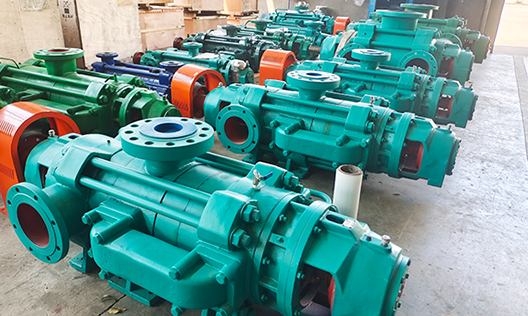
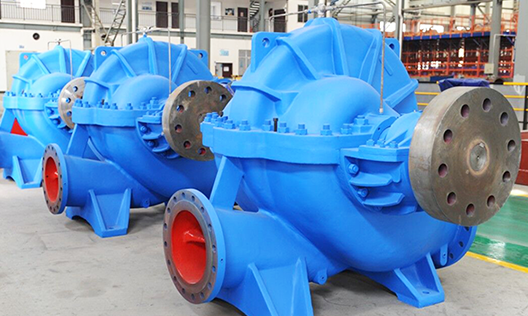
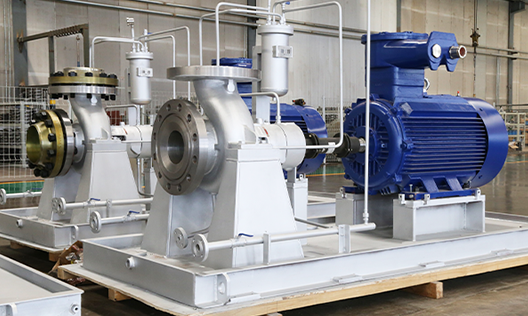
Puede fabricar 26 series de productos, incluyendo bombas de circulación para grandes centrales eléctricas, bombas de condensación para grandes centrales eléctricas, bombas petroquímicas, bombas multietapa, bombas de aguas residuales y lodo, bombas multietapa autoequilibradas, bombas de doble succión y única etapa tipo split, y bombas centrífugas de succión simple y única etapa.
-
Cases
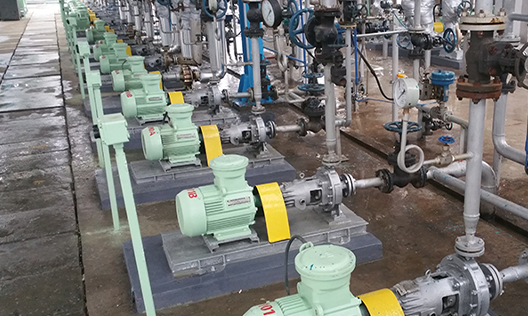
La elección de más de cientos de miles de clientes, cubriendo industrias como minería de carbón, metalurgia, química, energía, recursos hídricos, alimentos, municipalidades y protección ambiental, y exportando a Asia Sudeste, África, América y otros lugares.
-
Service
La empresa fue la primera en la industria en obtener las certificaciones internacionales del sistema de calidad ISO 9001:2008, del sistema de gestión ambiental ISO 14001 y del sistema de gestión de seguridad y salud ocupacional GB/T 28001, además de la certificación API 610 de la Asociación Estadounidense del Petróleo.
-
About us
La empresa, fundada en 1989, es una empresa nacional de alta tecnología integral que integra diseño, investigación y desarrollo, fabricación y servicios; actualmente es una empresa clave en la industria china de bombas centrífugas y una de las grandes fábricas especializadas.
-

Blogs
Con productos innovadores, calidad excepcional y servicios integrales, buscamos la verdad y la pragmática, avanzamos con iniciativa, y nos esforzamos por lograr el objetivo de ser "la marca líder en el campo de aplicación de bombas centrífugas en el país"! Raigada en Hunan, orientada a todo el país y hacia el mundo!
Cooling Solutions for Mining Multistage Centrifugal Pumps: A Comprehensive Overview of Approaches Ranging from Surface Spraying to Structural Optimization
Publication Date:
2026-04-01
Author:
Source:


Changsha Zoomlion Pump Industry Wear-Resistant Mining Multistage centrifugal pump It is widely used in the mining industry and tunnel drainage applications; however, its high head, high efficiency, and complex structure can easily lead to overheating. Below, Centrifugal pump Manufacturer Changsha Zoomlion Pump Industry Based on equipment characteristics and operating conditions, we will provide a professional cooling solution for multi-stage centrifugal mining pumps for reference by user organizations.

1. Surface Sprinkler Cooling: For small and medium-sized multistage pumps, a clean water source is used to continuously spray the pump casing in heat-dissipation areas, with the latent heat of vaporization of the water carrying away the heat. Note: The sprinkler system must be equipped with filtration devices to prevent impurities from clogging the cooling channels; when ambient humidity is high, ventilation measures should be implemented in conjunction to avoid heat buildup.
2. Forced-air cooling system: This system is suitable for environments with ambient temperatures ≤35°C and uniform heat dissipation. Axial fans are installed at critical locations on the pump body, such as the motor end cover and bearing housing; it is recommended that the fan airflow rate be at least 1.2 times the pump’s heat dissipation capacity. During installation, ensure tight sealing between the fan and the pump body to prevent dust from entering the motor cavity.
3. Cooling Circulation System: Under high-temperature operating conditions, a closed-loop cooling system shall be employed. The coolant shall preferably be an ethylene glycol–water mixture with a concentration of 30% to 50%, and the flow rate must ensure that the pump’s heat-transfer coefficient is ≥150 W/(m²·K). The system shall be equipped with a heat exchanger and a temperature-control valve to enable automatic regulation of the coolant temperature.
4. Structural Optimization Design: Reducing temperature rise at the source can be achieved through the following technologies:
① The pump body features a double-walled jacket structure, with flow passages internally equipped with turbulence-inducing ribs to enhance heat transfer efficiency.
② The impeller and guide vanes are made of low-friction materials (such as fluoroplastic alloys) to reduce mechanical losses;
③ The bearing housing is integrated with a water-cooling jacket, which employs a helical flow channel to enhance heat transfer.
5. Operations and Maintenance Assurance Measures:
Inspect the radiator surface cleanliness monthly to ensure that the heat dissipation area is ≥95% of the design value.
Radial bearing clearance shall be inspected quarterly, and when it exceeds the specified tolerance, the seals and lubricant must be replaced simultaneously. Under extreme operating conditions, it is recommended to install an infrared temperature monitoring system for real-time early warning of abnormal temperature rises. In practical applications, the above-mentioned measures should be tailored based on pump type (e.g., Type D, MD), power rating (15 kW–2000 kW), and environmental parameters (altitude, humidity). Changsha Zoomlion Pump Industry offers customized cooling solution design; for complex scenarios, its technical team can conduct on-site surveys to ensure stable system operation.
In addition, to meet the differentiated requirements of various industry-specific application scenarios, Changsha Zoomlion Pump Industry has developed an intelligent control system. This system integrates and centrally controls modules such as surface spray cooling, forced-air cooling, and cooling circulation through sensors and IoT technologies. By leveraging real-time monitoring data on pump body temperature, ambient temperature and humidity, and operating load, the system dynamically adjusts the operating parameters of each module.
For example, in agricultural irrigation applications, the system can automatically switch to cooling mode based on seasonal water-temperature variations, thereby ensuring effective temperature reduction while minimizing energy consumption. In continuous chemical-process operations, a redundant design enables self-diagnosis and automatic switchover in the event of failures, preventing shutdowns caused by localized overheating. The accompanying cloud-based O&M platform allows remote monitoring and data analysis of pump units deployed across multiple locations, enabling proactive identification of equipment aging trends and guiding users in developing preventive maintenance schedules. Through deep integration of hardware optimization and intelligent software, this solution has helped numerous customers achieve a 15%–20% improvement in overall equipment energy efficiency and reduce maintenance costs by more than 30%, providing an innovative solution for the long-term, stable operation of multistage pumps under high-temperature and heavy-load conditions.
Previous:
Recommended Information


Related Products
Perhaps you also want to know?
Zoomlian Pump Industry
Address:No. 210, Environmental Protection Middle Road, Yuhua Economic Development Zone, Changsha City, Hunan Province China
All rights reserved © Changsha Zoomlian Pump Co., Ltd.
This website supports IPv4 IPv6 bidirectional access
Website construction:Zhongqi Power Changsha