

-
Products
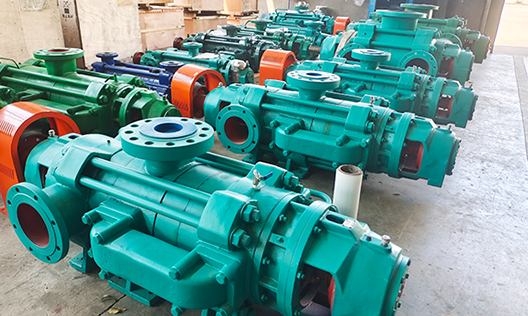
Puede fabricar 26 series de productos, incluyendo bombas de circulación para grandes centrales eléctricas, bombas de condensación para grandes centrales eléctricas, bombas petroquímicas, bombas multietapa, bombas de aguas residuales y lodo, bombas multietapa autoequilibradas, bombas de doble succión y única etapa tipo split, y bombas centrífugas de succión simple y única etapa.
-
Cases
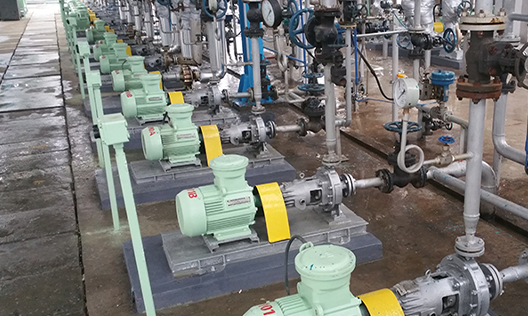
La elección de más de cientos de miles de clientes, cubriendo industrias como minería de carbón, metalurgia, química, energía, recursos hídricos, alimentos, municipalidades y protección ambiental, y exportando a Asia Sudeste, África, América y otros lugares.
-
Service
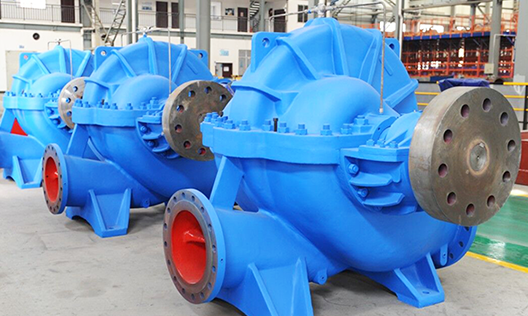
La empresa fue la primera en la industria en obtener las certificaciones internacionales del sistema de calidad ISO 9001:2008, del sistema de gestión ambiental ISO 14001 y del sistema de gestión de seguridad y salud ocupacional GB/T 28001, además de la certificación API 610 de la Asociación Estadounidense del Petróleo.
-
About us
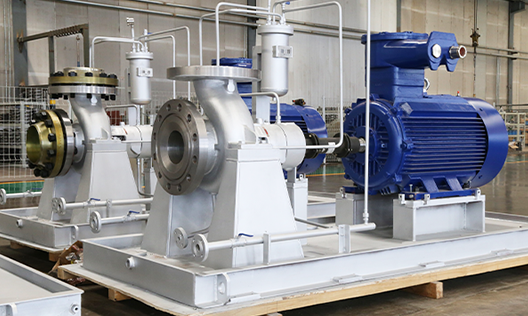
La empresa, fundada en 1989, es una empresa nacional de alta tecnología integral que integra diseño, investigación y desarrollo, fabricación y servicios; actualmente es una empresa clave en la industria china de bombas centrífugas y una de las grandes fábricas especializadas.
-

Blogs
Con productos innovadores, calidad excepcional y servicios integrales, buscamos la verdad y la pragmática, avanzamos con iniciativa, y nos esforzamos por lograr el objetivo de ser "la marca líder en el campo de aplicación de bombas centrífugas en el país"! Raigada en Hunan, orientada a todo el país y hacia el mundo!
Causes of Impeller Corrosion in High-Pressure Centrifugal Pumps and Engineering Mitigation Strategies
Publication Date:
2026-04-21
Author:
Source:


In the industry, high-pressure centrifugal pumps are officially referred to as multistage centrifugal pumps. As the core flow-through component, the impeller’s corrosion directly affects the pump unit’s operational efficiency and reliability. The following are manufacturers of multistage pumps: Changsha Zoomlion Pump Industry This paper analyzes, from a technical perspective, the primary causes of impeller corrosion in high-pressure centrifugal pumps and proposes corresponding mitigation measures, for reference by operations and maintenance personnel at user organizations.

1. Chemical corrosion:
When the pH of the conveyed medium deviates from the neutral range (becoming acidic or alkaline), or when strongly corrosive ions such as Cl⁻ and SO₄²⁻ are present, chemical reactions can occur with the impeller material—such as cast iron or stainless steel—leading to degradation of the material’s crystal lattice structure. The corrosion rate is positively correlated with both the concentration of the medium and the temperature, with this effect being particularly pronounced under high-temperature conditions.
2. Electrochemical Corrosion:
In aqueous environments containing conductive impurities, potential differences on the impeller surface give rise to microgalvanic systems, leading to anodic dissolution. This typically manifests as pitting and crevice corrosion, which are particularly accelerated in stress-concentrated regions such as the edges of the impeller blades.
3. Abrasion:
When hard particles in a fluid—such as silt, sand, or metal debris—flow at high velocity through a pump, they impact and abrade the impeller surface, leading to material loss. Particle hardness, flow velocity, and particle distribution density are the key factors influencing the degree of erosion.
4. Stress Corrosion Cracking (SCC):
When impellers are subjected to cyclic stresses—such as those arising from pump start–stop vibrations and pulsating pressure on the blades—and come into contact with corrosive media, intergranular cracking is likely to occur. Changsha Zoomlion Pump Industry has reduced the risk of stress-corrosion cracking by optimizing the stress distribution within the impeller structure.
5. Oxidative Corrosion:
In high-temperature, high-humidity environments, once the oxide film on a metal surface is damaged, the oxidation reaction continues unabated. In particular, when conveying high-temperature liquids, it is essential to select alloy materials that exhibit excellent resistance to high-temperature oxidation.
Preventive Measures: In light of the aforementioned causative factors, optimization is recommended in three key areas: ① Material Selection: Employ corrosion-resistant materials such as duplex stainless steel and Hastelloy; ② Operational Management: Control the pH of the process medium, remove particulate impurities, and optimize pump-startup and shutdown procedures; ③ Structural Design: Apply anti-corrosion coatings to the impeller surface and optimize flow passages to minimize vortices and stress concentrations. A thorough understanding of the impeller corrosion mechanism forms the foundation for Changsha Zhonglian Pump Industry to deliver highly effective solutions; by precisely matching equipment to operating conditions, impeller service life can be significantly extended, thereby reducing overall lifecycle costs.
Previous:
Recommended Information


Related Products
Perhaps you also want to know?
Zoomlian Pump Industry
Address:No. 210, Environmental Protection Middle Road, Yuhua Economic Development Zone, Changsha City, Hunan Province China
All rights reserved © Changsha Zoomlian Pump Co., Ltd.
This website supports IPv4 IPv6 bidirectional access
Website construction:Zhongqi Power Changsha