

-
Products
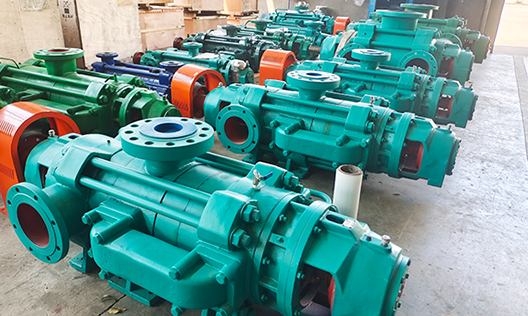
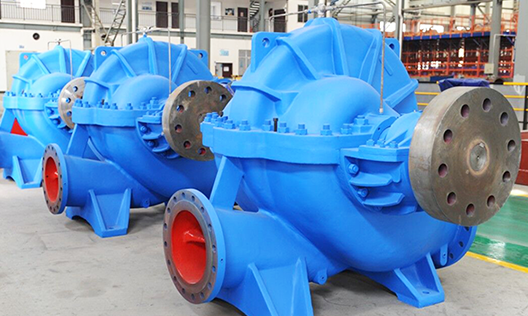
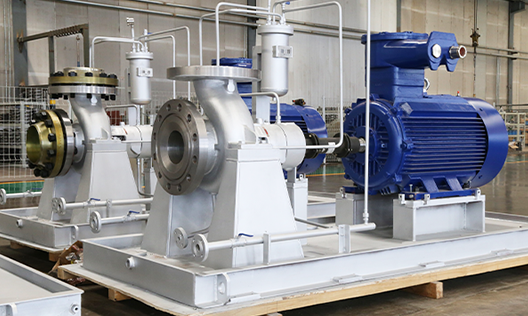
Puede fabricar 26 series de productos, incluyendo bombas de circulación para grandes centrales eléctricas, bombas de condensación para grandes centrales eléctricas, bombas petroquímicas, bombas multietapa, bombas de aguas residuales y lodo, bombas multietapa autoequilibradas, bombas de doble succión y única etapa tipo split, y bombas centrífugas de succión simple y única etapa.
-
Cases
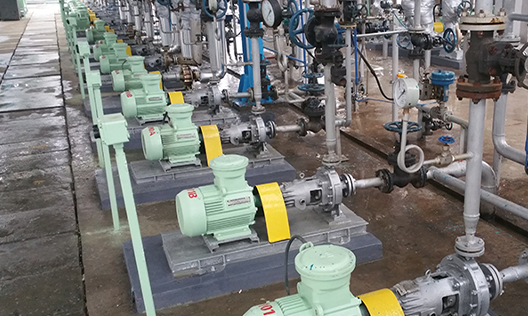
La elección de más de cientos de miles de clientes, cubriendo industrias como minería de carbón, metalurgia, química, energía, recursos hídricos, alimentos, municipalidades y protección ambiental, y exportando a Asia Sudeste, África, América y otros lugares.
-
Service
La empresa fue la primera en la industria en obtener las certificaciones internacionales del sistema de calidad ISO 9001:2008, del sistema de gestión ambiental ISO 14001 y del sistema de gestión de seguridad y salud ocupacional GB/T 28001, además de la certificación API 610 de la Asociación Estadounidense del Petróleo.
-
About us
La empresa, fundada en 1989, es una empresa nacional de alta tecnología integral que integra diseño, investigación y desarrollo, fabricación y servicios; actualmente es una empresa clave en la industria china de bombas centrífugas y una de las grandes fábricas especializadas.
-

Blogs
Con productos innovadores, calidad excepcional y servicios integrales, buscamos la verdad y la pragmática, avanzamos con iniciativa, y nos esforzamos por lograr el objetivo de ser "la marca líder en el campo de aplicación de bombas centrífugas en el país"! Raigada en Hunan, orientada a todo el país y hacia el mundo!
Operational Procedure for Hydraulic Pressure Adjustment of Horizontal Multistage Pumps and Professional Optimization Recommendations
Publication Date:
2026-05-19
Author:
Source:


As a core component in industrial production, mine drainage, and circulating water supply systems, the horizontal multistage pump’s hydraulic pressure regulation directly affects system efficiency and operational stability. In this paper, the multistage pump manufacturer… Changsha Zoomlion Pump Industry The following provides, from a technical‑specification perspective, an operational procedure for hydraulic pressure adjustment of horizontal multistage pumps, along with professional optimization recommendations, for reference by user organizations.

I. Preparations Before Adjusting Water Pressure
1. Safe Procedures: Disconnect the pump unit’s main power supply, perform the Lockout/Tagout (LOTO) procedure, and wear insulated gloves and safety goggles.
2. Parameter Verification: Refer to the “Changsha Zoomlion Pump Industry Multistage Pump Operation Manual” to confirm the system’s design water pressure (typically indicated on the pump nameplate or in the system drawings), and record the current operating parameters (such as inlet pressure and flow rate).
3. Tool preparation: Equip with a Class 0.4 pressure gauge (range 0–1.6 MPa), a torque wrench (for adjusting valve tightening), and a set of wrenches.
II. Standard Procedure for Water Pressure Regulation
1. Positioning and Regulation Device: In Changsha Zoomlion Pump Industry’s multistage pumps, the pressure regulation system typically consists of a diaphragm-type pressure-reducing valve at the inlet and a manual regulating valve at the outlet, with closed-loop pressure control achieved via an adjusting nut.
2. Step-by-step adjustment: Rotate the adjustment knob (inlet valve) clockwise to increase system pressure, with each adjustment not exceeding 0.05 MPa; after each adjustment, maintain stable pressure for 3 minutes. Rotate the adjustment knob (outlet valve) counterclockwise to decrease system pressure, with each adjustment not exceeding 0.03 MPa; after each adjustment, maintain stable pressure for 5 minutes.
3. Dynamic Monitoring: After starting the pump unit, verify the actual water pressure using the remote pressure gauge or the system pressure gauge; the deviation from the design value shall be kept within ±0.05 MPa.
III. Key Technical Specifications
1. Energy‑saving control principle: In accordance with GB 18613‑2012, “Energy Efficiency Limit Values and Energy‑Saving Rating for Clear Water Centrifugal Pumps,” high‑efficiency, energy‑saving pumps shall operate at the system’s design operating point, avoiding overpressure conditions (exceeding the rated pressure by more than 10% can increase energy consumption by approximately 20%). It is recommended to employ variable‑frequency drive–based coordinated control, with simultaneous monitoring of motor power during regulation. When the shaft power deviates from the design value by ±5%, the control parameters must be recalibrated.
2. Safety Redundancy Design: Before leaving the factory, Changsha Zhonglian Pump Industry’s multistage pumps are equipped with pressure overload protection (with a trip pressure set at 1.2 times the design value). During adjustment, over‑travel beyond the protection threshold is strictly prohibited, and the control valve must undergo torque verification after adjustment—typically 15–20 N·m—to prevent seal failure caused by vibration.
IV. Maintenance and Optimization Recommendations
1. Periodic calibration: Conduct a sealing test on the regulating mechanism quarterly (leakage rate ≤ 0.01 MPa/min), and replace the valve‑core seals of the control valve annually (using original spare parts from Changsha Zhonglian Pump Industry).
2. System‑wide Optimization: If water hammer occurs, a pressure‑stabilizing tank (with a volume ≥ pump flow rate × 30 seconds) should be installed after adjustment. It is recommended to coordinate with the technical team at Changsha Zhonglian Pump Industry to employ CFD flow‑field simulations for optimizing pipeline resistance coefficients, aiming to reduce frictional losses along the pipeline by 15%.
3. Fault Warning: If any of the following conditions occur, immediately shut down the equipment and contact professional service: the adjustment knob is stuck (possibly due to wear on the valve spool; disassemble for cleaning or replacement); the pressure gauge pointer fluctuates (possibly indicating a pressure sensor malfunction; it is recommended to use an intelligent pressure transmitter).
Recommended Information


Related Products
Perhaps you also want to know?
Zoomlian Pump Industry
Address:No. 210, Environmental Protection Middle Road, Yuhua Economic Development Zone, Changsha City, Hunan Province China
All rights reserved © Changsha Zoomlian Pump Co., Ltd.
This website supports IPv4 IPv6 bidirectional access
Website construction:Zhongqi Power Changsha