

-
Products
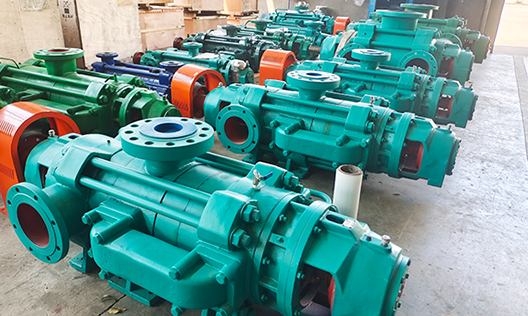
Puede fabricar 26 series de productos, incluyendo bombas de circulación para grandes centrales eléctricas, bombas de condensación para grandes centrales eléctricas, bombas petroquímicas, bombas multietapa, bombas de aguas residuales y lodo, bombas multietapa autoequilibradas, bombas de doble succión y única etapa tipo split, y bombas centrífugas de succión simple y única etapa.
-
Cases
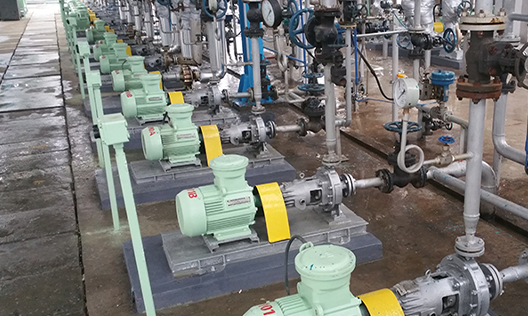
La elección de más de cientos de miles de clientes, cubriendo industrias como minería de carbón, metalurgia, química, energía, recursos hídricos, alimentos, municipalidades y protección ambiental, y exportando a Asia Sudeste, África, América y otros lugares.
-
Service
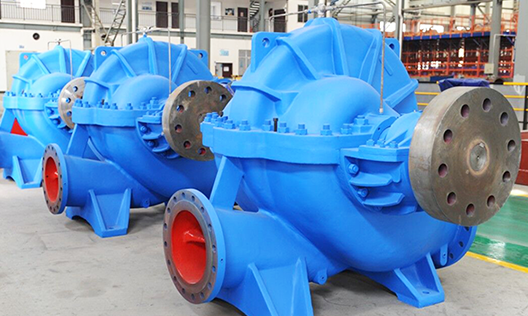
La empresa fue la primera en la industria en obtener las certificaciones internacionales del sistema de calidad ISO 9001:2008, del sistema de gestión ambiental ISO 14001 y del sistema de gestión de seguridad y salud ocupacional GB/T 28001, además de la certificación API 610 de la Asociación Estadounidense del Petróleo.
-
About us
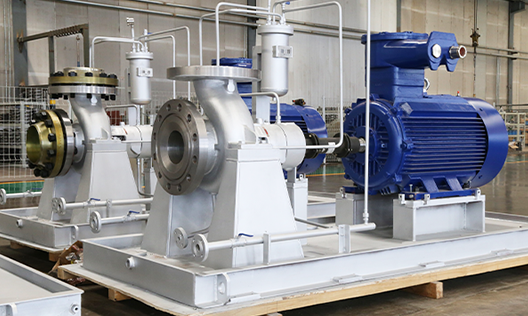
La empresa, fundada en 1989, es una empresa nacional de alta tecnología integral que integra diseño, investigación y desarrollo, fabricación y servicios; actualmente es una empresa clave en la industria china de bombas centrífugas y una de las grandes fábricas especializadas.
-

Blogs
Con productos innovadores, calidad excepcional y servicios integrales, buscamos la verdad y la pragmática, avanzamos con iniciativa, y nos esforzamos por lograr el objetivo de ser "la marca líder en el campo de aplicación de bombas centrífugas en el país"! Raigada en Hunan, orientada a todo el país y hacia el mundo!
Vertical Long Shaft Pump – Reliable Solution for Deep Well and Industrial Applications
Publication Date:
2026-01-09
Author:
Source:


A vertical long shaft pump is a specialized centrifugal pump designed to handle fluids in deep well or high-volume industrial applications where standard horizontal pumps are impractical. This type of pump is widely used in water supply systems, irrigation projects, cooling water circulation, wastewater treatment, chemical processing, and mining operations. Its unique vertical design, coupled with an extended shaft, allows it to transfer liquids efficiently from deep reservoirs, sumps, or underground tanks, providing stable flow rates and reliable operation over long distances.

The vertical long shaft pump consists of several key components, including a motor or drive system, a pump bowl assembly located at the bottom of the shaft, bearings and a column pipe to support the long shaft, and an optional coupling or gearbox to connect the motor to the pump impeller. The impeller is the primary component responsible for moving the liquid, and it is typically designed for high efficiency, capable of handling large volumes while minimizing energy consumption. Bearings and column support ensure the long shaft remains stable and aligned during operation, preventing vibration, wear, and potential damage to the pump system.
One of the main advantages of a vertical long shaft pump is its ability to operate in deep or submerged environments. Unlike conventional horizontal pumps, which may require additional suction piping or priming, vertical pumps can be installed directly above the fluid source, reducing the complexity of the system and improving reliability. The extended shaft allows the pump impeller to reach fluid levels that are inaccessible to other types of pumps, making it ideal for deep wells, sumps, and reservoirs where suction head limitations would otherwise restrict performance.
Vertical long shaft pumps are available in a variety of configurations, including single-stage and multi-stage designs. Single-stage pumps are suitable for applications requiring moderate flow and head, while multi-stage pumps provide higher pressure and extended vertical lift capabilities. The choice of impeller design, material selection, and shaft diameter depends on the type of fluid being pumped, its temperature, chemical composition, and the required flow rate and head. Many vertical long shaft pumps are made from corrosion-resistant materials such as stainless steel, high-chrome alloys, or specialized coatings, allowing them to handle abrasive, corrosive, or high-temperature fluids safely.
Efficiency and reliability are critical in vertical long shaft pump design. Proper alignment of the motor, shaft, and impeller ensures smooth operation and reduces energy losses. Bearings are designed to handle radial and axial loads effectively, while the column pipe minimizes vibration and provides structural support. Regular maintenance, such as lubrication of bearings, inspection of the impeller, and monitoring for wear or corrosion, helps maintain optimal performance and extend the service life of the pump. Additionally, some modern vertical long shaft pumps incorporate advanced monitoring systems, including vibration sensors, temperature gauges, and flow meters, enabling operators to detect potential issues early and perform predictive maintenance.
Applications of vertical long shaft pumps are diverse. In municipal water supply and irrigation systems, they transfer large volumes of water from reservoirs, rivers, or underground wells to treatment facilities or distribution networks. In industrial cooling and process water circulation, they maintain steady water flow to heat exchangers, condensers, and process units. They are also widely used in wastewater and sludge handling systems, efficiently moving fluids with suspended solids or high viscosity. In mining operations, vertical long shaft pumps are employed for dewatering, slurry handling, and transporting process water over long vertical distances, ensuring safe and continuous operation.

Installation and operational considerations are crucial for vertical long shaft pumps. Proper alignment between the motor and pump shaft is essential to avoid excessive vibration, bearing wear, and premature failure. Lubrication systems for bearings must be carefully managed, particularly for long-shaft applications where load distribution is critical. The pump must be designed to accommodate thermal expansion, axial thrust, and potential cavitation, ensuring safe operation under varying conditions. Additionally, suction conditions, such as submergence depth and fluid characteristics, must be carefully evaluated to maintain optimal performance.
In summary, vertical long shaft pumps are highly versatile and reliable solutions for transferring liquids from deep wells, reservoirs, sumps, or industrial systems where horizontal pumps are impractical. Their vertical design, extended shaft, and efficient impeller provide high-performance operation in a variety of demanding applications. With proper design, material selection, installation, and maintenance, vertical long shaft pumps offer excellent durability, stable flow rates, and energy-efficient operation, making them essential equipment for water supply, irrigation, industrial processing, wastewater treatment, and mining industries.
Previous:
Next:
Recommended Information



Related Products
Perhaps you also want to know?
Zoomlian Pump Industry
Address:No. 210, Environmental Protection Middle Road, Yuhua Economic Development Zone, Changsha City, Hunan Province China
All rights reserved © Changsha Zoomlian Pump Co., Ltd.
This website supports IPv4 IPv6 bidirectional access
Website construction:Zhongqi Power Changsha