

-
Products
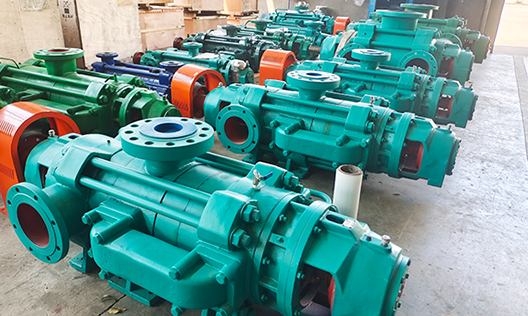
Puede fabricar 26 series de productos, incluyendo bombas de circulación para grandes centrales eléctricas, bombas de condensación para grandes centrales eléctricas, bombas petroquímicas, bombas multietapa, bombas de aguas residuales y lodo, bombas multietapa autoequilibradas, bombas de doble succión y única etapa tipo split, y bombas centrífugas de succión simple y única etapa.
-
Cases
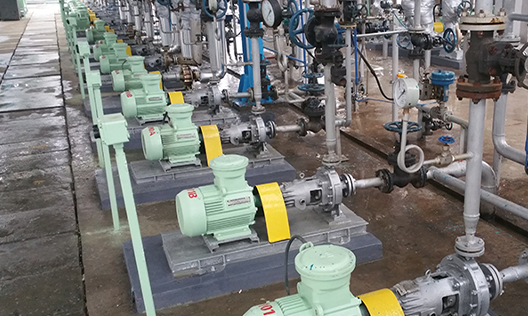
La elección de más de cientos de miles de clientes, cubriendo industrias como minería de carbón, metalurgia, química, energía, recursos hídricos, alimentos, municipalidades y protección ambiental, y exportando a Asia Sudeste, África, América y otros lugares.
-
Service
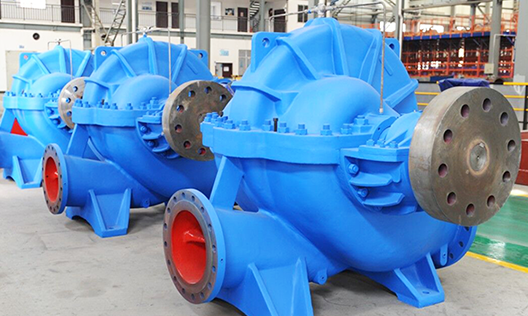
La empresa fue la primera en la industria en obtener las certificaciones internacionales del sistema de calidad ISO 9001:2008, del sistema de gestión ambiental ISO 14001 y del sistema de gestión de seguridad y salud ocupacional GB/T 28001, además de la certificación API 610 de la Asociación Estadounidense del Petróleo.
-
About us
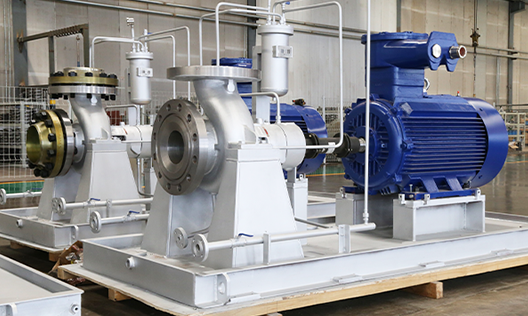
La empresa, fundada en 1989, es una empresa nacional de alta tecnología integral que integra diseño, investigación y desarrollo, fabricación y servicios; actualmente es una empresa clave en la industria china de bombas centrífugas y una de las grandes fábricas especializadas.
-

Blogs
Con productos innovadores, calidad excepcional y servicios integrales, buscamos la verdad y la pragmática, avanzamos con iniciativa, y nos esforzamos por lograr el objetivo de ser "la marca líder en el campo de aplicación de bombas centrífugas en el país"! Raigada en Hunan, orientada a todo el país y hacia el mundo!
Methods for Handling Air Leaks in Horizontal Multistage Centrifugal Pumps
Publication Date:
2025-11-28
Author:
Source:


As the core equipment for industrial fluid transportation, horizontal multistage centrifugal pumps have sealing integrity at their pipeline connections directly affecting operational efficiency and energy-saving performance. If there is air leakage at these connections, not only will the pump’s actual head drop and flow rate diminish—thus directly undermining its “high-efficiency” characteristics—but it will also lead to an artificially high motor load. According to industry data, even a slight air leak can increase energy consumption per unit of time. 15%-30% Meanwhile, the increased frequency of unplanned shutdowns for maintenance drives up overall operation and maintenance costs. Therefore, promptly and accurately addressing gas leaks is crucial for ensuring the stable operation of equipment. In this article, Centrifugal pump Manufacturer Changsha Zhonglian Pump Industry Will be introduced Horizontal multistage centrifugal pump Methods for handling air leaks, helping user organizations address this type of failure.

I. First Identify, Then Treat: Precisely Locate the Leak Point 3 Specialized approach
Accurately identifying leak points is a prerequisite for solving the problem. Relying solely on basic sensory judgment can easily overlook hidden leaks. It is recommended to combine the following commonly used industry methods:
Sensory-assisted detection:
Hearing: Place your ear close to the pipe connection (maintaining a safe distance) and listen for hissing or rustling sounds indicating air leakage. High-frequency leak noises often originate from gaps around bolts, while low-frequency noises may indicate localized damage to seals.
Tactile sensation: Gently touch the edge of the connecting flange with the back of a clean hand (to avoid burns from high temperatures). If you feel a directional cool breeze, you can initially narrow down the location of the leak.
Visual inspection: Observe whether light impurities such as dust particles and fibers are drifting in a directional manner at the joints, or whether a faint “white mist” (caused by airflow carrying moisture) appears in a dry environment.
Soap Water Verification Method:
For suspected leak areas, apply diluted neutral soap solution using a brush (concentration: 5%-10% ), if persistent bubbling occurs (bubble diameter ≥ 1mm and will not rupture), allowing for precise localization of the leak—this method achieves an accuracy rate of up to... for identifying leaks in tiny cracks. 95% The above are common methods used for on-site maintenance.
II. Scenario-Based Treatment: Emergency and Professional Remedial Solutions
Depending on the severity of the leak and the operational status of the equipment, different handling strategies must be adopted to avoid the mistake of treating temporary fixes as permanent solutions.
1. Emergency Temporary Handling (Applicable to Scenarios Where Immediate Shutdown Is Not Possible)
If the equipment is involved in a critical stage of continuous production, you can first use emergency measures to control the leakage and buy time for professional repairs. However, please note that the validity period of the emergency plan must not exceed— 48 Hour:
Select “pipeline emergency sealing tape” (such as PTFE Material: self-adhesive tape, wrapped along the flange gap. 2-3 Circle, keep it wrapped as you wrap. 50% Overlap rate: The outer layer is lightly secured with stainless steel cable ties.
For leaks with small gaps, you can apply a “fast-drying temporary sealant” (such as an acrylic-based sealant). Before applying the sealant, be sure to clean the surface of any oil or grease. The thickness of the sealant layer should be controlled within... 0.5-1mm , solidification 20 It can resume low-load operation after a few minutes.
2. Professional root treatment (thorough repair after shutdown)
After emergency handling, the equipment should be shut down as soon as possible and the leak issue thoroughly resolved through the following specialized steps to ensure long-term sealing performance of the equipment:
Bolt tightening: Operate precisely using a torque wrench.
Check the bolts on the connecting flange. / Check whether the nut is loose using a torque wrench of the corresponding specification (e.g., M16 Bolt torque 45-55N ・ m ), tighten step by step in a “diagonal cross sequence” to avoid over-tightening on one side, which could cause flange deformation (flange deformation can lead to new sealing gaps). If bolts show signs of stripped threads or corrosion, they must be replaced simultaneously with high-strength bolts of the same specification (e.g., 8.8 Grade carbon steel bolt).
Seal Replacement: Select the appropriate material based on the medium.
If the sealing gasket / If the sealing ring shows signs of aging, cracking, or compression deformation, it must be replaced with a suitable industrial-grade seal.
For conveying ordinary media such as water and oils: choose nitrile rubber ( NBR ) Seals, temperature-resistant -40 Celsius -120 ℃, elastic recovery rate ≥ 80%;
For conveying corrosive liquids (such as acid and alkali solutions): Select fluororubber. FKM ) Seals with excellent chemical corrosion resistance and suitable operating temperature. -20 Celsius -200 °C;
When replacing, clean the flange sealing surfaces to ensure they are free of scratches, oil stains, or impurities, thereby preventing uneven pressure on the seals.
Position calibration: Use a dial indicator to adjust coaxiality.
If the pipeline is misaligned with the pump body (e.g., the flanges are not concentric), it will cause uneven stress on the sealing surfaces, leading to air leakage. Therefore, a dial indicator must be used to check the coaxiality between the pump shaft and the pipeline flange, and the tolerance for deviation must be controlled within: 0.1mm/m Within; during adjustment, add or remove flange gaskets (thickness 0.1-0.5mm ) Fine-tune to ensure there is no stress concentration at the connection points.
Enhanced sealing: Apply industrial-grade sealant.
Apply “silicone-modified industrial sealant” (rather than temporary adhesive) to the flange sealing surface (or on both sides of the seal). This type of sealant has a wide temperature resistance range. -60 Celsius -250 ℃, Withstand Voltage ≥ 10MPa It can fill tiny sealing gaps and, after curing, forms an elastic sealing layer that extends the service life of the seal. 2-3 Twice.
Recommended Information


Related Products
Perhaps you also want to know?
Zoomlian Pump Industry
Address:No. 210, Environmental Protection Middle Road, Yuhua Economic Development Zone, Changsha City, Hunan Province China
All rights reserved © Changsha Zoomlian Pump Co., Ltd.
This website supports IPv4 IPv6 bidirectional access
Website construction:Zhongqi Power Changsha