

-
Products
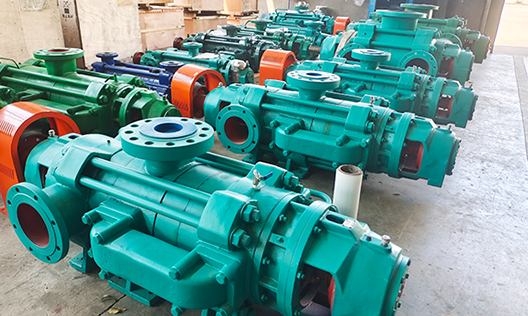
Puede fabricar 26 series de productos, incluyendo bombas de circulación para grandes centrales eléctricas, bombas de condensación para grandes centrales eléctricas, bombas petroquímicas, bombas multietapa, bombas de aguas residuales y lodo, bombas multietapa autoequilibradas, bombas de doble succión y única etapa tipo split, y bombas centrífugas de succión simple y única etapa.
-
Cases
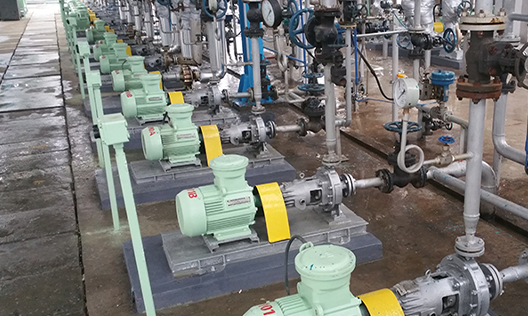
La elección de más de cientos de miles de clientes, cubriendo industrias como minería de carbón, metalurgia, química, energía, recursos hídricos, alimentos, municipalidades y protección ambiental, y exportando a Asia Sudeste, África, América y otros lugares.
-
Service
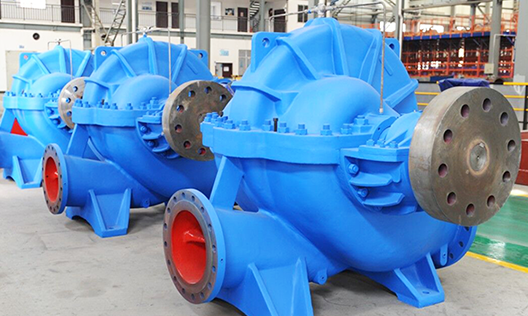
La empresa fue la primera en la industria en obtener las certificaciones internacionales del sistema de calidad ISO 9001:2008, del sistema de gestión ambiental ISO 14001 y del sistema de gestión de seguridad y salud ocupacional GB/T 28001, además de la certificación API 610 de la Asociación Estadounidense del Petróleo.
-
About us
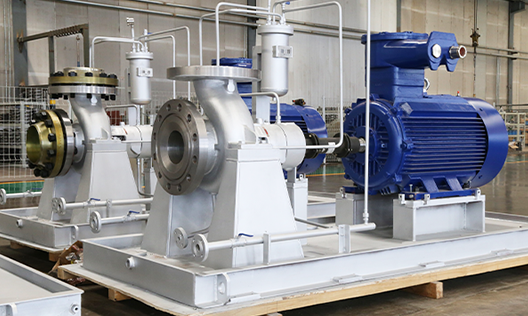
La empresa, fundada en 1989, es una empresa nacional de alta tecnología integral que integra diseño, investigación y desarrollo, fabricación y servicios; actualmente es una empresa clave en la industria china de bombas centrífugas y una de las grandes fábricas especializadas.
-

Blogs
Con productos innovadores, calidad excepcional y servicios integrales, buscamos la verdad y la pragmática, avanzamos con iniciativa, y nos esforzamos por lograr el objetivo de ser "la marca líder en el campo de aplicación de bombas centrífugas en el país"! Raigada en Hunan, orientada a todo el país y hacia el mundo!
What exactly can multi-stage chemical pumps pump? They’ve got these media completely under control!
Publication Date:
2025-09-15
Author:
Source:


Before selecting a multistage chemical pump, people always ask: "What exactly can this pump handle?" In fact, multistage chemical pumps are quite capable, but they can't casually come into contact with just any medium. Today, Chemical pump Manufacturing factory China United Pump Industry Let’s break it down—what exactly can multi-stage chemical pumps handle? Which media can they reliably manage? Choosing the right one ensures long-lasting performance and prevents potential issues.
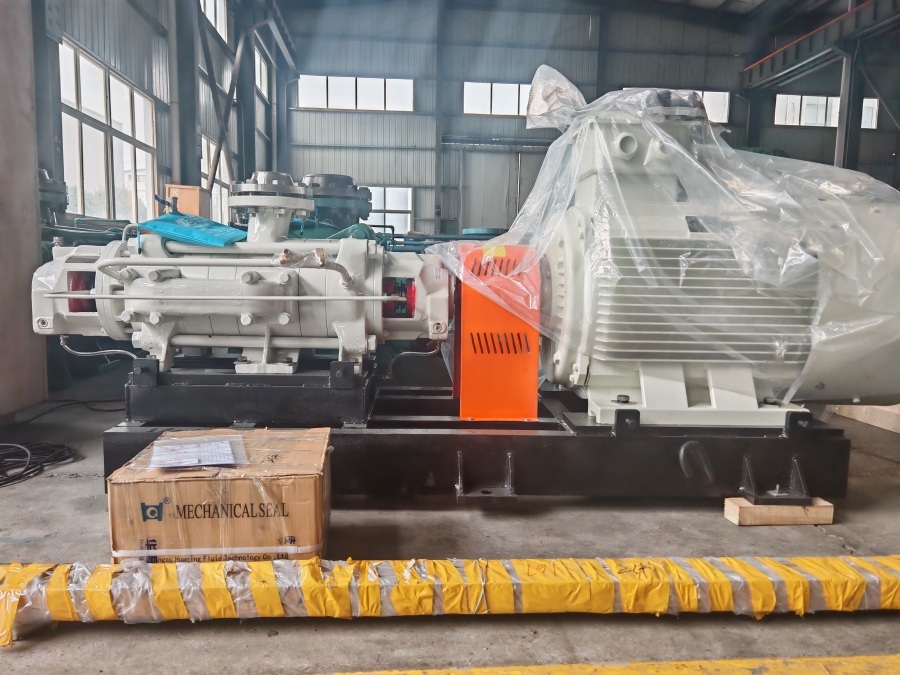
First, let’s look at the “hard indicators” of multi-stage chemical pumps.
At the heart of a multi-stage chemical pump lies the "multi-stage impeller series," which uses one impeller after another to build up pressure, effectively "pushing" the liquid to much greater head heights—typically ranging from tens to hundreds of meters. However, having sheer "power" isn't enough; the pump must also withstand the aggressive nature of the medium—such as acid-alkali corrosion, extreme heat exposure, and abrasive wear caused by particulates. That's why its materials and sealing design are specifically tailored for chemical applications, making it far superior to ordinary pumps designed for clean water use.
Common media types: Adapted by "personality" classification
1. Highly corrosive medium: The "nemesis" of acids and bases
Like sulfuric acid ( 98% The following), hydrochloric acid ( 30% The following), sodium hydroxide ( 40% The following: Such highly corrosive liquids will cause ordinary pumps to "fall apart" after just a few uses, but multi-stage chemical pumps can handle them effectively. 316L Stainless steel, fluoroplastics (such as PTFE ) The lining, capable of withstanding the "bite" of acids and bases, is commonly found in phosphate chemical plants and acid pickling workshops. When conveying corrosive liquid materials, the pump body and impeller remain virtually "unscathed."
2. High-temperature medium: Unafraid of the "baking" test
In chemical reactions, many media need to be at 100 Transmission above ℃, such as heat transfer oil (up to a maximum of 350 ℃), high-temperature organic solvents, multi-stage chemical pumps made from high-temperature resistant alloy steel and graphite seals—this sealing design effectively prevents "leakage" even under extreme heat, ensuring long-term stable operation at elevated temperatures without being disrupted by thermal expansion or contraction.
3. Medium containing solid particles: A wear-resistant "expert"
Some chemical media aren't "pure water"—for example, catalyst suspensions (containing small particles) or pesticide formulations (with crystalline solids). Meanwhile, the impellers of multi-stage chemical pumps are treated for wear resistance—such as using high-chromium alloys—and feature wide flow passages, making it less likely for particles to get stuck. Mechanical seals are used for sealing purposes. + Rinsing procedure to prevent particles from entering the friction surfaces, capable of handling solids content ≤ 10% The medium.
4. High-Purity Media: The Clean "Guardian"
Solvents and ultrapure water used in the pharmaceutical and electronics industries must be free of impurities. Multi-stage chemical pumps are made from hygienic-grade stainless steel. 316L ), the inner wall is polished with no dead corners, and a double-end face mechanical seal is used for sealing, effectively preventing medium contamination. When conveying high-purity liquids, "purity" remains absolutely uncompromised.
Although multi-stage chemical pumps are "versatile," they're not omnipotent—for example, when it comes to transporting hydrofluoric acid. HF ) Must use Hastelloy alloy to transport highly oxidizing nitric acid (> 65% ) Must use titanium materials; the medium contains large particles (> 5mm ) or fibers—prior communication is required to switch to wear-resistant flow paths. Be sure to clarify the temperature of the medium before selecting the appropriate option. pH Value, solid content, and particle size—otherwise, even the best pump simply "can't handle it." Multi-stage chemical pumps aren’t “capable of handling anything,” but for the specific challenges of chemical applications—such as acids, alkalis, heat, abrasiveness, and purity—they come with tailored "solutions." Choose the right medium, and the pump will efficiently deliver your fluid. Pick the wrong one, though, and not only will the pump fail quickly, but you could also face serious safety risks.
Recommended Information



Related Products
Perhaps you also want to know?
Zoomlian Pump Industry
Address:No. 210, Environmental Protection Middle Road, Yuhua Economic Development Zone, Changsha City, Hunan Province China
All rights reserved © Changsha Zoomlian Pump Co., Ltd.
This website supports IPv4 IPv6 bidirectional access
Website construction:Zhongqi Power Changsha