

-
Products
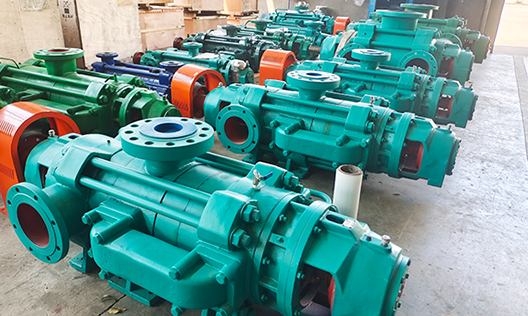
Puede fabricar 26 series de productos, incluyendo bombas de circulación para grandes centrales eléctricas, bombas de condensación para grandes centrales eléctricas, bombas petroquímicas, bombas multietapa, bombas de aguas residuales y lodo, bombas multietapa autoequilibradas, bombas de doble succión y única etapa tipo split, y bombas centrífugas de succión simple y única etapa.
-
Cases
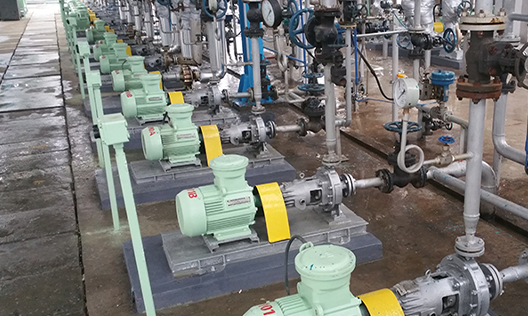
La elección de más de cientos de miles de clientes, cubriendo industrias como minería de carbón, metalurgia, química, energía, recursos hídricos, alimentos, municipalidades y protección ambiental, y exportando a Asia Sudeste, África, América y otros lugares.
-
Service
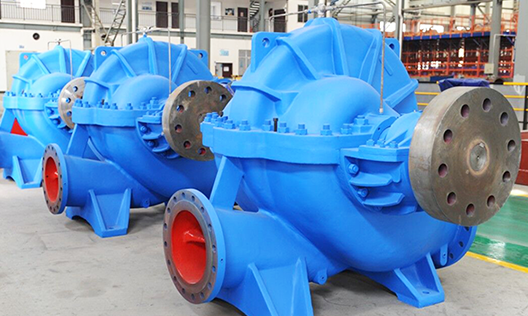
La empresa fue la primera en la industria en obtener las certificaciones internacionales del sistema de calidad ISO 9001:2008, del sistema de gestión ambiental ISO 14001 y del sistema de gestión de seguridad y salud ocupacional GB/T 28001, además de la certificación API 610 de la Asociación Estadounidense del Petróleo.
-
About us
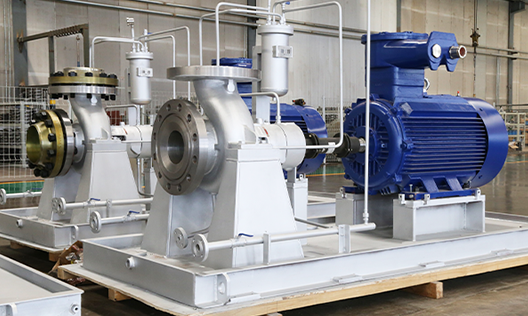
La empresa, fundada en 1989, es una empresa nacional de alta tecnología integral que integra diseño, investigación y desarrollo, fabricación y servicios; actualmente es una empresa clave en la industria china de bombas centrífugas y una de las grandes fábricas especializadas.
-

Blogs
Con productos innovadores, calidad excepcional y servicios integrales, buscamos la verdad y la pragmática, avanzamos con iniciativa, y nos esforzamos por lograr el objetivo de ser "la marca líder en el campo de aplicación de bombas centrífugas en el país"! Raigada en Hunan, orientada a todo el país y hacia el mundo!
What should be done about the high power consumption of mine-use self-balancing multistage pumps? It may be caused by the following reasons:
Publication Date:
2026-04-13
Author:
Source:


Mine-use self-balancing multistage pumps are specialized pump models developed for applications such as underground water inflow management in mines and tunnel projects, and their wear-resistant and durable characteristics should be fully reflected in the design parameter matching. However, during actual operation, these pumps may encounter the issue of high power consumption. What should be done when this problem arises? Below, a manufacturer of self-balancing multistage pumps... Changsha Zoomlion Pump Industry Mining-related analysis from a technical perspective Self-balancing multistage pump Causes of high power consumption and corresponding countermeasures, for reference by user organizations.
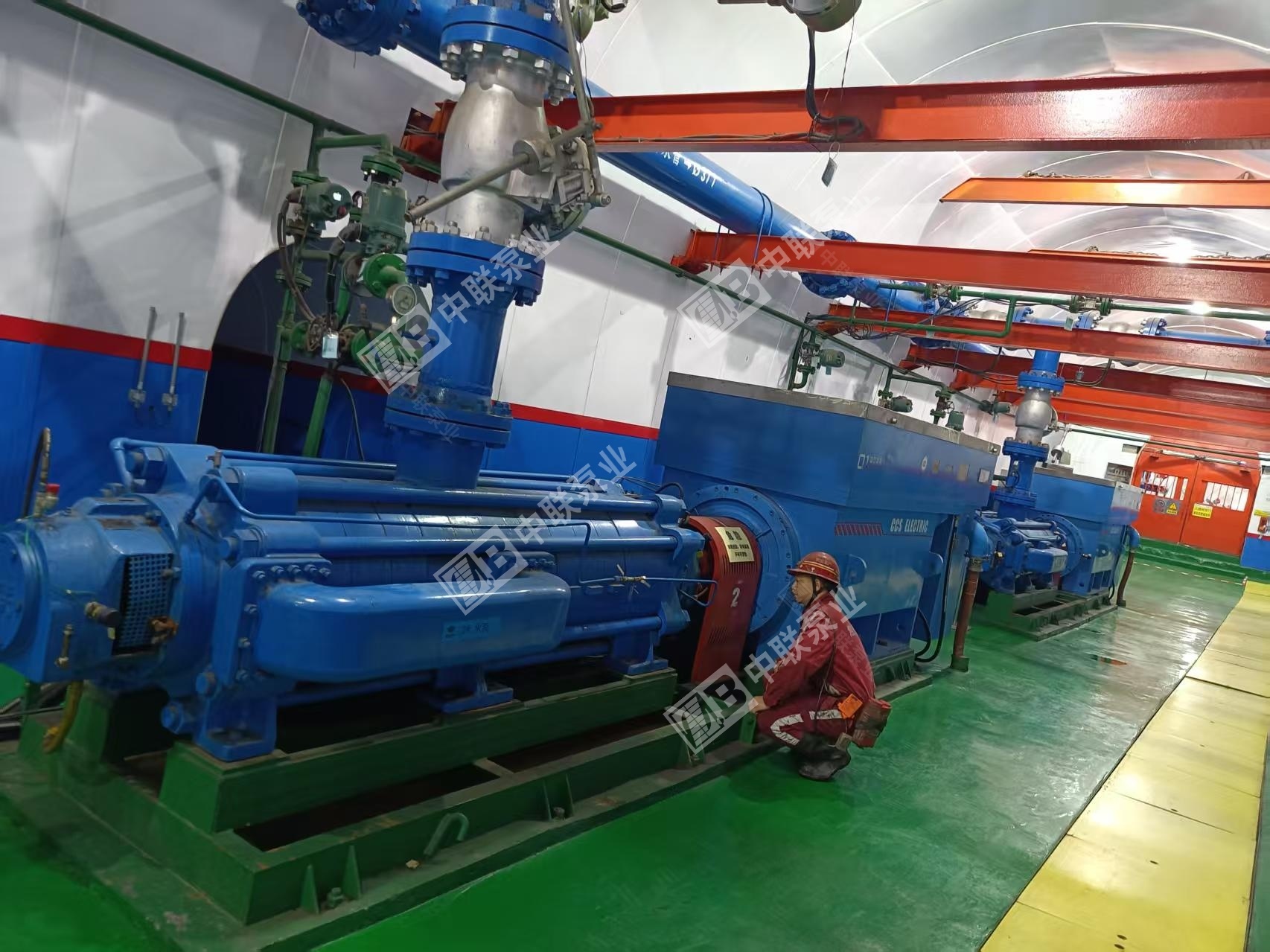
I. Core Causes of Excessive Power Consumption
1. Flow–head mismatch: When the actual operating flow deviates from the design flow by more than ±10%, the pump operating point shifts out of the high-efficiency zone, resulting in a simultaneous decline in volumetric efficiency and hydraulic efficiency and an increase in measured power consumption by 15%–30%.
2. Abnormal speed fluctuations: Faults in the motor’s variable-frequency drive system or wear in the mechanical speed-control device can cause the speed to deviate from its rated value. For every ±5% deviation in speed, shaft power changes in a cubic relationship, resulting in measured power consumption fluctuations of more than 20%.
3. Medium density deviation: When the density of the conveyed medium exceeds the design value (e.g., slurry concentration > 15% above the design value), pump shaft power increases in direct proportion to density, resulting in an observed increase in power consumption of 10%–25%.
4. Excessive pipeline system resistance: Pipeline design flow velocity exceeds the economic flow velocity (e.g., for a DN200 pipe, the flow velocity exceeds 2.5 m/s), mismatched pipe diameters, throttling by valves, or blockage due to impurities can increase the pipeline resistance coefficient by more than 30%, requiring the pump to deliver additional power to compensate.
5. Excessive wear of bearing pairs: When the radial clearance of rolling bearings exceeds 0.3 mm or the bearing clearance of sliding bearings exceeds 0.5 mm, the frictional power loss of the mechanical seal increases, resulting in a measured increase in electrical power consumption of 12%–18%. 6. Decline in motor energy efficiency: If a Y-series explosion-proof mine motor has been operated for more than 10,000 hours without an energy-efficiency assessment, or if stator winding insulation has aged and rotor bar breaks have occurred, causing the motor efficiency to drop from 90% to below 85%, the overall plant power consumption will increase by 5%–12%.
II. Implementation Path for System Optimization
1. Flow rate and head must be properly matched: Real-time monitoring is conducted using pipeline flow meters and pressure sensors, and a variable-frequency drive system is employed to dynamically adjust the flow rate, ensuring that the operating point remains within the high-efficiency range (measured efficiency > 85%).
2. Closed-loop speed control: A Siemens S7-1200 PLC paired with an ABB ACS510 variable-frequency drive is configured to achieve speed control with an accuracy of ±0.5%, utilizing a PID control algorithm to maintain the operating speed within a ±0.5% tolerance.
3. Dynamic Monitoring of Process Parameters: Online concentration meters (accuracy ±0.5%) and density meters (accuracy ±0.001 g/cm³) are used to collect real-time data, which is then linked to the DCS system to adjust the frequency of the feed pumps, thereby maintaining the slurry concentration within ±5% of the design value.
4. Energy Efficiency Optimization of Piping Systems:
Pipe Sizing: Determine pipe diameter based on economic flow velocity (2.0–2.5 m/s for clear water and 1.2–1.8 m/s for slurry), and use hydraulic calculation software (such as HYSYS) to optimize the pipeline friction factor.
Impurity Control: Install a strainer at the pump inlet (with mesh size within ±10% of the design value), and conduct pipeline endoscopic inspection every 500 operating hours.
5. Bearing Condition Monitoring:
A SKF 23130CC/W33 bearing temperature sensor (measurement range: −40°C to 150°C) is used; an alarm is automatically triggered when the bearing temperature exceeds 75°C. It is recommended to perform vibration spectrum analysis every 2,000 operating hours.
6. Motor Efficiency Enhancement: Regularly use infrared thermography to monitor stator winding temperatures, and conduct DC resistance tests every 3,000 operating hours. When the insulation resistance falls below 1 MΩ, apply vacuum impregnation with varnish for repair, ensuring that motor efficiency is maintained at or above 90%.
Changsha Zoomlion Pump Industry recommends that users establish Mining multistage pump Three-tier monitoring system: daily flow and head monitoring, weekly medium density testing, and monthly bearing vibration spectrum analysis. By establishing a “Pump Operating Parameters Database,” closed-loop management for fault early warning and energy-efficiency optimization is achieved, ensuring that the power consumption of MDP-type pumps remains within ±8% of the design value throughout their entire lifecycle.
Recommended Information


Related Products
Perhaps you also want to know?
Zoomlian Pump Industry
Address:No. 210, Environmental Protection Middle Road, Yuhua Economic Development Zone, Changsha City, Hunan Province China
All rights reserved © Changsha Zoomlian Pump Co., Ltd.
This website supports IPv4 IPv6 bidirectional access
Website construction:Zhongqi Power Changsha